
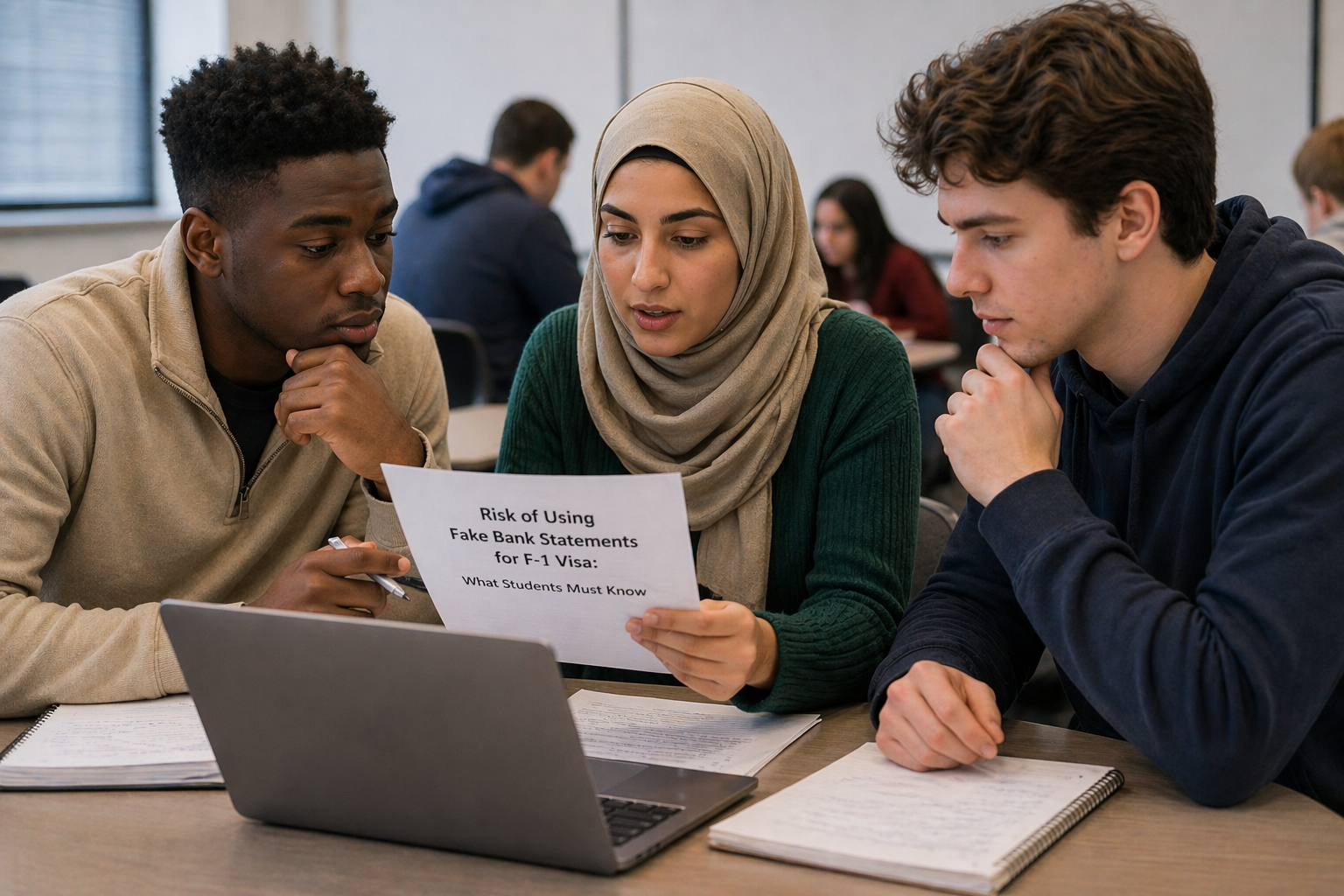
For many students, arranging financial documents is one of the most stressful parts of the visa process. When funds are tight or timelines are short, some may feel tempted to take shortcuts. One such risky shortcut is using fake bank statements.
Understanding the risk of using fake bank statements is extremely important before making any decision. While it may seem like a quick solution, it can create long-term problems that are difficult to fix.
Why the Risk of Using Fake Bank Statements Is Serious
Financial proof is a key part of your F-1 visa application. Visa officers review your documents to understand whether you can support your education in the United States.
When there is any doubt about authenticity, it raises concerns about your overall credibility. The risk of using fake bank statements is not just about one document—it affects how your entire application is viewed.
- It can lead to immediate visa refusal
- Your credibility may be questioned in future applications
- It creates a record that can impact long-term plans
This is why honesty and clarity are always the safer approach.
How Visa Officers Identify Fake Financial Documents
Many students assume that fake documents cannot be detected, but visa officers are trained to identify inconsistencies.
Common Red Flags
- Unusual transaction patterns
- Sudden large deposits without explanation
- Formatting inconsistencies in statements
- Mismatch between declared income and savings
In some cases, documents may also be cross-checked or questioned during the interview.
Consequences of Using Fake Bank Statements
The risk of using fake bank statements goes beyond just a refusal. It can affect your future opportunities as well.
- Visa refusal: Your application may be denied immediately
- Loss of trust: Future applications may be reviewed more strictly
- Interview difficulty: You may struggle to explain inconsistencies
Even if not explicitly stated, credibility issues can have lasting effects.
Better Alternatives to Avoid Financial Risk
If you are worried about finances, there are safer and more practical ways to strengthen your application.
1. Use Genuine Financial Sources
- Personal savings
- Family sponsorship
- Education loans
2. Be Transparent About Your Situation
It is better to explain your financial situation clearly rather than trying to hide it.
3. Show a Logical Funding Plan
- Break down tuition and living expenses
- Explain how each part will be covered
4. Consider Affordable Options
Choosing universities within your financial range can reduce pressure and improve your overall profile.
Common Mistakes Students Make
Here are some mistakes that increase the risk of using fake bank statements:
- Relying on agents who suggest shortcuts
- Believing that financial documents are rarely checked
- Submitting inconsistent or incomplete information
- Not preparing explanations for financial history
Being aware of these mistakes can help you avoid unnecessary risks.
Practical Tips for Strong Financial Presentation
- Keep your financial documents organized and updated
- Understand your bank statements before the interview
- Be ready to explain large transactions honestly
- Stay consistent across all documents
Your goal is to show clarity and confidence—not perfection.
Final Thoughts: Choose Long-Term Safety Over Short-Term Risk
The risk of using fake bank statements is simply not worth it. While it may seem like a quick fix, it can create challenges that affect your future plans.
A genuine, well-explained financial profile is always stronger than a perfect-looking but questionable one. Visa officers are not looking for perfection—they are looking for clarity and honesty.
Focus on building a transparent and realistic application. This approach not only supports your visa chances but also gives you confidence throughout the process.
From university selection and scholarships to F-1 visa interview preparation — expert guidance built for international students.