
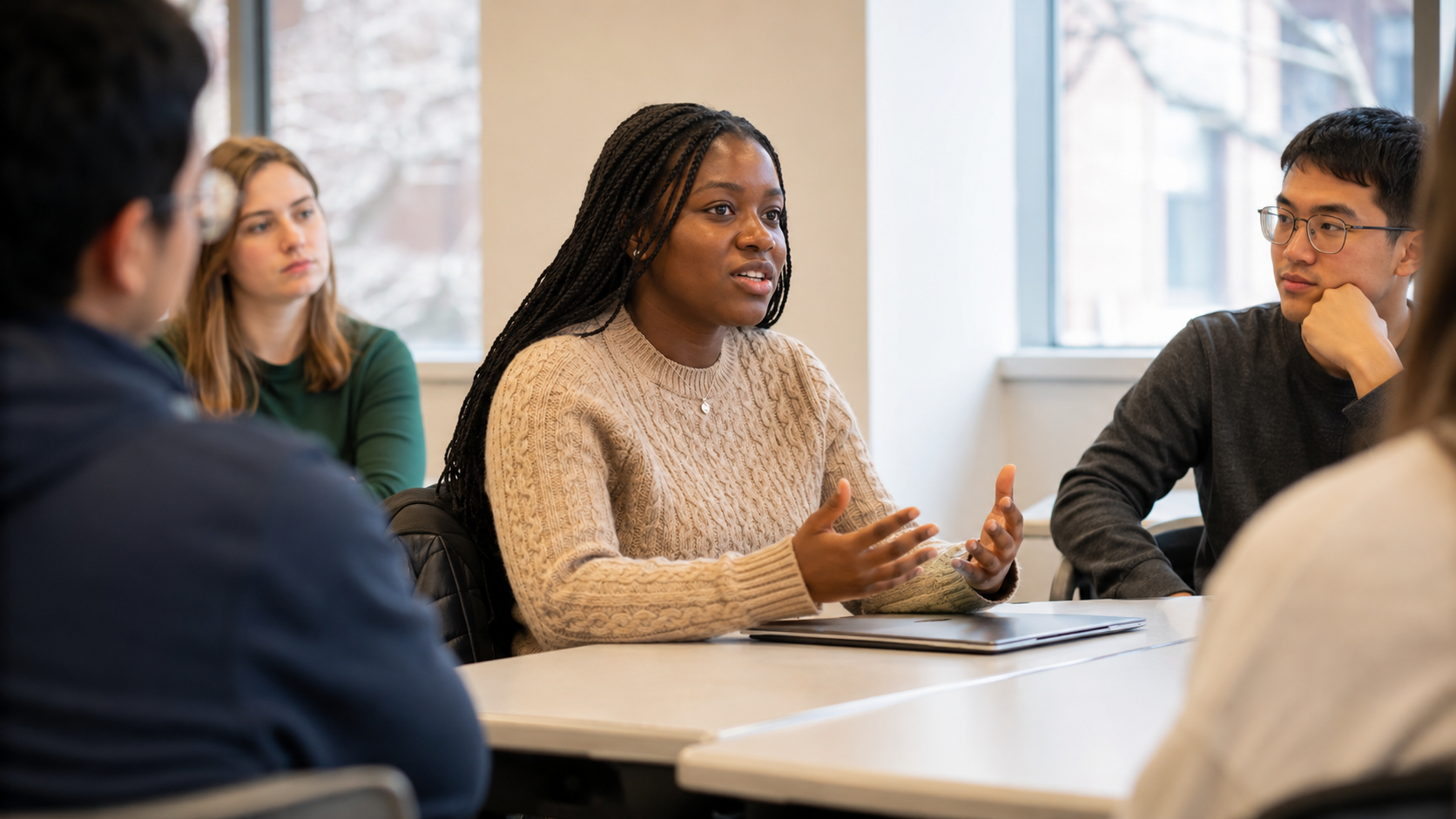
Many international students want to improve communication skills quickly after arriving in the United States. You may understand English well, but speaking in class, joining group projects, asking professors questions, or making friends can still feel stressful. This is normal. Communication is not only about perfect grammar. It is about confidence, clarity, listening, and practice.
If you are an F-1 student or planning to study in the U.S., strong communication skills can help you in classrooms, campus jobs, internships, networking events, interviews, and everyday life. The good news is that you do not need years to start improving. With the right daily habits, you can become more confident in a short time.
Why Communication Skills Matter for International Students
Good communication skills can make your U.S. student experience much easier. In many universities, students are expected to participate in class discussions, work in teams, ask questions, explain ideas, and communicate with professors. This can feel different if you come from an education system where students mostly listen quietly.
Improving communication skills quickly can help you:
- Speak more confidently in class.
- Build friendships with classmates.
- Perform better in group projects.
- Ask professors and advisors for help.
- Prepare for internships, CPT, OPT, and job interviews.
- Reduce nervousness in daily conversations.
You do not need to sound like a native speaker. Your goal should be clear, respectful, and confident communication.
How to Improve Communication Skills Quickly with Daily Practice
The fastest way to improve communication skills quickly is to practice a little every day. Many students wait until they feel perfect before speaking. This is a mistake. Confidence grows after practice, not before practice.
1. Speak English for 10 Minutes Every Day
Start with a small goal. Speak English for 10 minutes daily, even if you are alone. Choose a simple topic and talk out loud.
You can speak about:
- Your day on campus.
- A class you attended.
- A movie or video you watched.
- Your future career goal.
- A topic related to your major.
This habit trains your brain to think and speak faster. It also helps you notice words you use often and words you need to learn.
2. Record Yourself and Listen Back
Recording yourself may feel uncomfortable at first, but it is one of the fastest ways to improve. Use your phone and speak for one or two minutes. Then listen to the recording.
Check for three things:
- Did I speak clearly?
- Did I pause too much?
- Can someone understand my main point?
Do not focus too much on accent. Accent is normal. Focus on clarity, speed, and confidence.
3. Learn Useful Phrases, Not Only Vocabulary
Many students memorize individual words, but real communication often depends on phrases. Phrases help you speak more naturally and quickly.
Useful classroom phrases include:
- “Could you please explain that again?”
- “I have a question about this point.”
- “In my opinion, this means…”
- “I agree with that because…”
- “Can I add one more idea?”
Practice these phrases until they feel easy. When you already know useful sentence patterns, speaking becomes less stressful.
How to Improve Communication Skills Quickly in Class
Classroom communication is one of the biggest challenges for international students. You may worry about making mistakes, speaking too slowly, or being judged by classmates. But most students are focused on learning, not judging your English.
1. Prepare One Question Before Each Class
Before class, read the topic and prepare one question. It can be simple. The goal is to train yourself to participate.
Examples:
- “Can you give an example of this concept?”
- “How is this used in real life?”
- “Is this similar to what we learned last week?”
Even if you do not ask the question every time, preparing it helps you think actively.
2. Start with Short Participation
You do not need to give long answers immediately. Start small. Say one sentence in class or during a group discussion.
For example:
- “I think this idea is important.”
- “I agree with your point.”
- “I found this part confusing.”
- “Maybe we can divide the project into sections.”
Small participation builds confidence over time.
3. Join Study Groups
Study groups are a great place to practice communication because the environment is usually less formal than class. You can ask questions, explain ideas, and learn how other students speak about academic topics.
If you feel shy, start by listening and taking notes. Then slowly add your opinion or ask a question.
How to Improve Communication Skills Quickly Outside the Classroom
Communication improves faster when you practice in real life. Campus life gives many chances to speak, listen, and build confidence.
1. Attend Campus Events
Join workshops, club meetings, international student events, or career center sessions. These events give you natural opportunities to meet people and start conversations.
Simple conversation starters include:
- “Is this your first time attending this event?”
- “What major are you studying?”
- “How did you hear about this club?”
- “Do you know any other good campus events?”
2. Practice Active Listening
Good communication is not only speaking. Listening matters too. Active listening means you show the other person that you understand and care.
You can practice active listening by:
- Making eye contact naturally.
- Nodding when you understand.
- Asking follow-up questions.
- Repeating the main point in your own words.
For example, you can say, “So you mean the deadline is next Friday, right?” This shows attention and avoids confusion.
3. Talk to One New Person Each Week
Set a realistic goal. Talk to one new person each week. It can be a classmate, roommate, lab partner, club member, or student worker on campus.
You do not need a long conversation. A two-minute conversation is enough. The goal is consistency.
Common Mistakes to Avoid When Improving Communication Skills
Many students slow their progress because they expect perfection. Avoid these common mistakes:
- Waiting until your English is perfect: You improve by speaking, not by waiting.
- Focusing only on accent: Clear communication matters more than sounding native.
- Memorizing too many difficult words: Simple words used clearly are more powerful.
- Avoiding conversations: Avoidance increases fear over time.
- Speaking too fast: Slow, clear speech is easier to understand.
- Not asking for clarification: It is okay to say, “Could you repeat that?”
Practical Weekly Plan to Improve Communication Skills Quickly
Here is a simple weekly plan you can follow as an international student:
- Monday: Record yourself speaking for two minutes.
- Tuesday: Ask one question in class or after class.
- Wednesday: Learn five useful phrases for academic discussion.
- Thursday: Join a study group or speak with a classmate.
- Friday: Attend one campus event or club meeting.
- Saturday: Watch a short educational video and summarize it out loud.
- Sunday: Review your progress and write down three new words or phrases.
This plan is simple, but it works because it builds a habit. Small daily actions can create strong improvement over time.
Final Thoughts: You Can Improve Communication Skills Quickly with Consistency
Learning how to improve communication skills quickly does not mean becoming perfect overnight. It means building confidence step by step. As an international student, you may feel nervous at first, but every conversation makes you stronger.
Start with small daily practice. Speak for 10 minutes, record yourself, learn useful phrases, ask questions in class, and join campus conversations. You do not need perfect English to succeed. You need clear communication, courage, and consistency.
Your voice matters in the classroom, in group projects, and on campus. The more you use it, the more confident you will become.
From university selection and scholarships to F-1 visa interview preparation — expert guidance built for international students.