
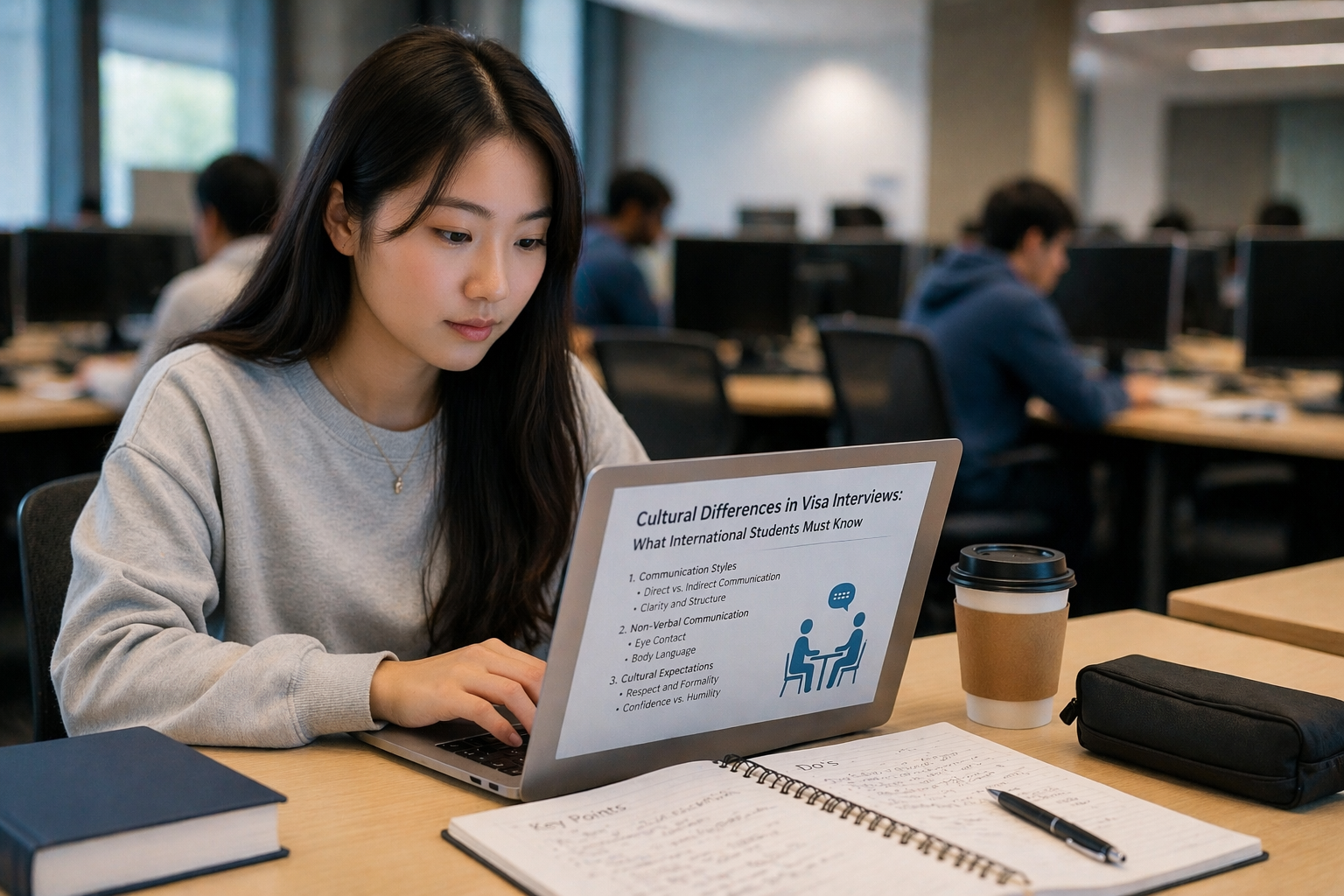
Many students walk into their visa interview feeling prepared, only to leave confused about what went wrong. One often overlooked factor is cultural differences in visa interviews. What feels normal in your home country may be interpreted very differently by a visa officer.
This can create misunderstandings, even when your documents and intentions are strong. Understanding these cultural differences can help you communicate more clearly and confidently.
Why Cultural Differences in Visa Interviews Matter
Visa interviews are not just about documents—they are about communication. Officers are trained in a specific interview style, often influenced by Western communication norms.
Because of this, cultural differences in visa interviews can affect how your answers are perceived, even if your intentions are genuine.
- Direct vs indirect communication styles
- Eye contact expectations
- Confidence vs humility balance
- Clarity and structure of answers
These small differences can sometimes lead to confusion during the interview.
Common Cultural Differences Students Face
1. Direct vs Indirect Communication
In many countries, indirect communication is polite. However, visa officers usually expect clear and direct answers.
- Avoid long explanations without answering the question
- Start with a clear answer, then briefly explain
2. Eye Contact and Body Language
In some cultures, avoiding eye contact shows respect. In interviews, moderate eye contact shows confidence.
- Maintain natural eye contact
- Avoid looking down constantly
3. Confidence vs Modesty
Some students hesitate to speak confidently to avoid sounding arrogant. However, too much hesitation can seem like uncertainty.
- Speak clearly about your plans
- Be confident but not exaggerated
4. Short vs Detailed Answers
Some students give very short answers, while others over-explain. Both can create confusion.
- Keep answers concise but complete
- Avoid memorized or robotic responses
How Cultural Differences in Visa Interviews Affect Outcomes
Miscommunication does not mean rejection automatically, but it can create doubt. For example:
- Unclear answers may suggest lack of preparation
- Low confidence may raise questions about intent
- Overly complex answers may confuse the officer
This is why adapting your communication style is important.
Step-by-Step: How to Prepare for Cultural Differences
1. Practice Clear Communication
- Answer questions directly
- Use simple and structured sentences
2. Do Mock Interviews
- Simulate real interview conditions
- Get feedback on your communication style
3. Record Yourself
- Notice your tone and body language
- Identify areas where you hesitate
4. Understand Interview Expectations
- Research common F-1 visa questions
- Prepare your answers in your own words
Common Mistakes to Avoid
- Memorizing answers without understanding them
- Avoiding eye contact completely
- Speaking too softly or unclearly
- Giving unrelated or lengthy explanations
- Trying to copy someone else’s speaking style
Your goal is to communicate clearly—not perfectly.
Practical Tips for Interview Day
- Listen carefully before answering
- Pause briefly to organize your thoughts
- Speak at a steady pace
- Stay calm even if you don’t understand a question immediately
If you don’t understand something, it is okay to politely ask for clarification.
Final Thoughts: Adapt, Don’t Change Yourself
Understanding cultural differences in visa interviews does not mean changing who you are. It simply means adapting your communication to match the interview setting.
When you combine clear communication with genuine intent, you reduce the chances of misunderstanding. Focus on clarity, confidence, and honesty.
With the right preparation, you can present your story in a way that is both authentic and easy to understand.
From university selection and scholarships to F-1 visa interview preparation — expert guidance built for international students.