
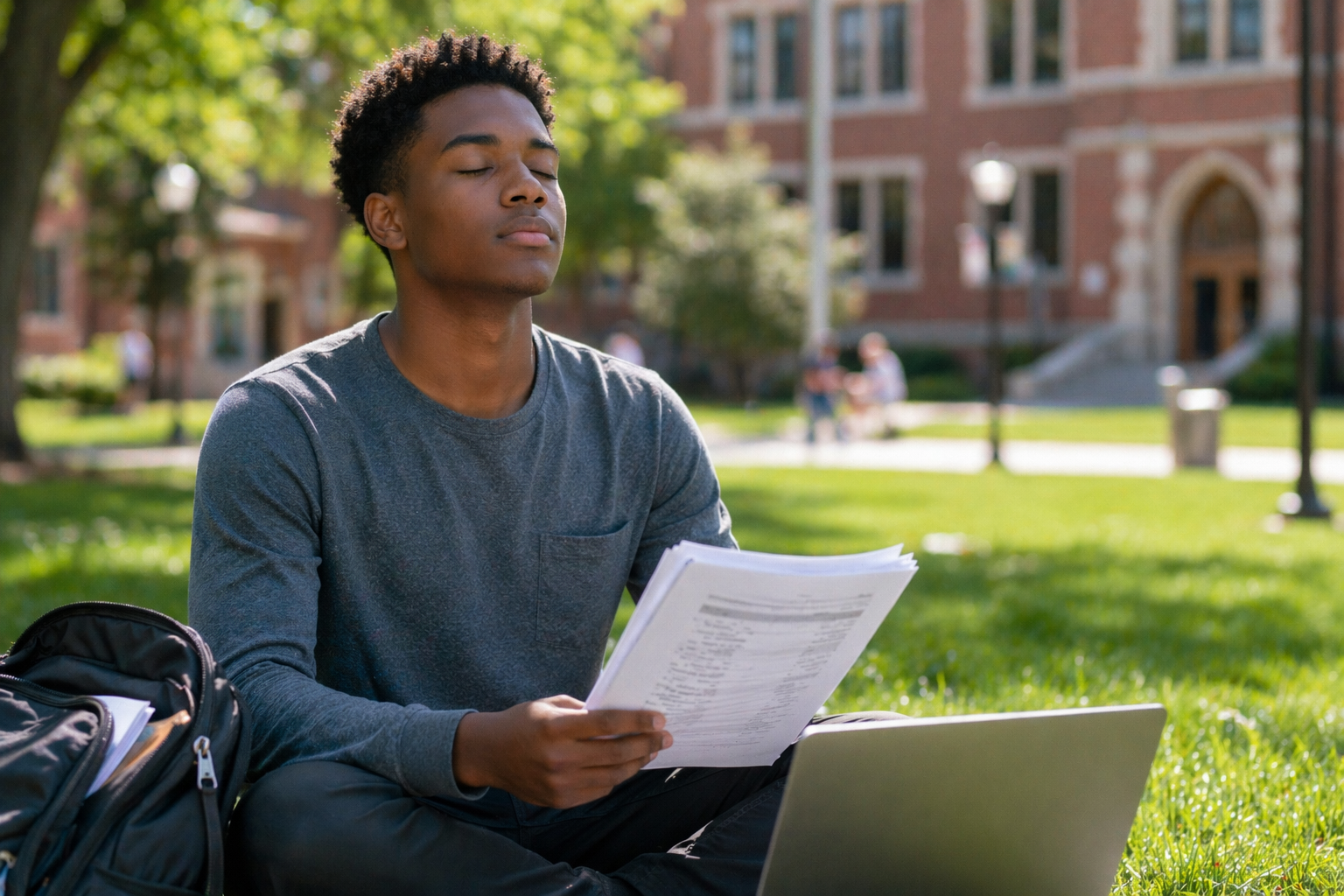
It’s completely normal to feel nervous before your visa interview. But many students don’t realize how much how stress impacts your answers during the conversation itself.
You may have prepared everything—documents, answers, university details—but in the actual interview, stress can affect your clarity, confidence, and communication. The good news is that with the right approach, you can manage this stress effectively.
Why Understanding How Stress Impacts Your Answers Matters
Stress does not just affect how you feel—it directly affects how you respond. Visa officers are not only listening to your answers, but also observing how you communicate.
When you understand how stress impacts your answers, you can take steps to stay calm and present your thoughts more clearly.
How Stress Impacts Your Answers in Visa Interviews
1. Short or Incomplete Responses
When nervous, many students give very brief answers.
- Missing important details
- Failing to fully explain their intent
2. Forgetting Prepared Information
Stress can make you forget things you already know.
- University details
- Course information
- Career plans
3. Speaking Too Fast or Too Slow
Your speaking pace often changes under stress.
- Talking too fast makes answers unclear
- Talking too slowly can seem uncertain
4. Lack of Confidence in Delivery
Even correct answers can sound weak if confidence is low.
- Hesitation
- Uncertain tone
Step-by-Step: How to Control Stress Before and During the Interview
1. Practice Under Real Conditions
Practice helps reduce uncertainty.
- Do mock interviews with time limits
- Practice answering unexpected questions
2. Focus on Understanding, Not Memorization
Memorized answers can break under pressure.
- Understand your application deeply
- Be ready to explain things naturally
3. Use Simple Breathing Techniques
Breathing can help you reset your focus.
- Take slow, deep breaths before entering
- Pause briefly before answering questions
4. Slow Down Your Speech
Speaking slightly slower improves clarity.
- Take a second to think before responding
- Keep your answers structured and simple
5. Accept That Some Nervousness Is Normal
You do not need to eliminate stress completely.
- Use it as energy to stay alert
- Focus on communication, not perfection
Common Stress-Related Mistakes to Avoid
- Rushing through answers without thinking
- Overthinking simple questions
- Trying to recall memorized scripts
- Avoiding eye contact due to nervousness
These small mistakes can make your answers less effective, even if your profile is strong.
Practical Tips to Stay Calm on Interview Day
- Arrive early: Avoid last-minute pressure
- Keep your documents organized: Reduces anxiety
- Maintain a positive mindset: Focus on your preparation
- Stay present: Listen carefully to each question
Confidence comes from preparation and mindset, not perfection.
Final Thoughts: Control Your Stress, Control Your Answers
Understanding how stress impacts your answers is one of the most important parts of visa interview preparation.
Your knowledge and preparation are already there. The key is to present them clearly and calmly. When you manage your stress, your answers naturally become more confident and structured.
Take your time, stay focused, and trust your preparation. A calm mind can make a powerful difference in how you communicate your story.
From university selection and scholarships to F-1 visa interview preparation — expert guidance built for international students.