
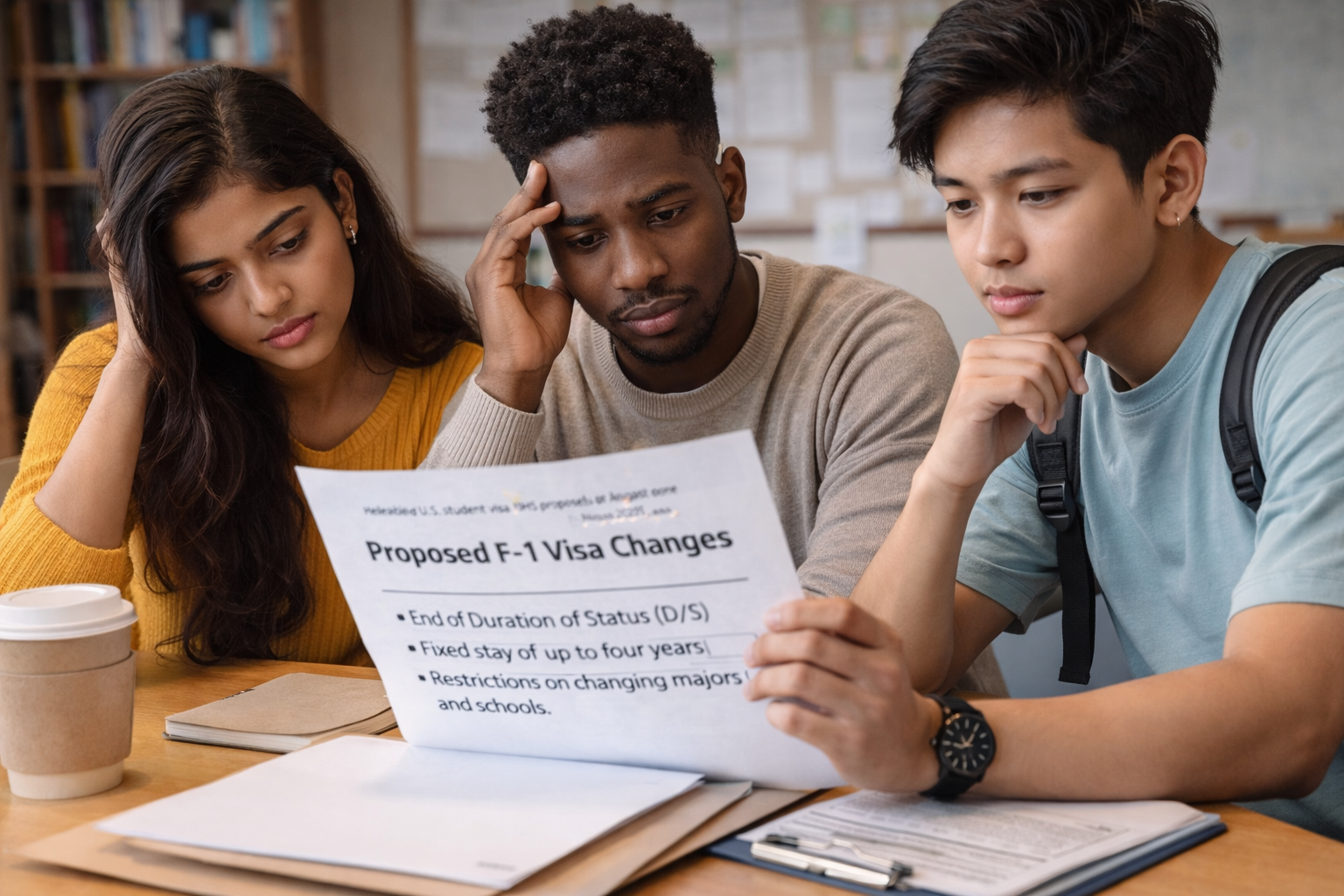
For decades, international students in the United States have relied on the concept of “Duration of Status” (D/S). Under this system, students could remain in the U.S. for as long as they were pursuing their academic program and maintaining status.
In August 2025, the U.S. Department of Homeland Security (DHS) proposed a major change that could reshape the student visa experience. While the rule is still under review and not yet in effect, understanding the proposed changes now can help students plan more carefully and avoid future surprises.
What Is “Duration of Status” (D/S) on an F-1 Visa?
Under the current system, F-1 and J-1 students are admitted for “Duration of Status,” meaning:
- You remain legally in the U.S. while enrolled full time
- Your stay is tied to your academic program, not a fixed date
- There is flexibility if a program takes longer than expected
This flexibility has allowed students to adjust academic plans, change majors, or take additional time without immediately falling out of status.
What Is the Proposed Change to Duration of Status?
The most significant proposed F-1 visa change is the elimination of Duration of Status. DHS has suggested replacing it with a fixed period of stay.
Under the proposal:
- Students would be admitted for a maximum of four years, or
- The program end date listed on the I-20, whichever is shorter
- A 30-day grace period would apply after completion
This represents a major shift from flexibility to fixed timelines.
How a Fixed Period of Stay Could Affect F-1 Students
A fixed period of stay would require students to plan their academic journey more precisely.
Potential effects include:
- Less flexibility for delayed graduation
- Greater pressure to complete programs on time
- Stricter monitoring of academic progress
Students who previously relied on extra semesters may need to adjust expectations.
New Formal Extension Process (EOS)
Under the proposed rule, students who need additional time would be required to file an Extension of Stay (EOS) with USCIS before their authorized stay expires.
Key points include:
- Extensions would require formal government approval
- Processing times may add uncertainty
- Missing deadlines could lead to status issues
This would add a new administrative layer to completing a degree.
Proposed Restrictions on Changing Majors or Transferring Schools
Another important part of the proposed F-1 visa rules involves limiting changes during the academic program.
For Undergraduate Students
- Changing majors during the first year may be restricted
- Students may need stronger justification for changes
For Graduate Students
- Transferring programs or schools could face additional scrutiny
- Changes may require formal approval
This could reduce flexibility for students who discover new academic interests.
New Criteria for Extensions
The proposed rule suggests limiting acceptable reasons for extending stay.
Extensions may be allowed only for:
- Compelling academic reasons
- Medical circumstances
- Events beyond the student’s control, such as natural disasters
Academic probation may no longer qualify as a valid reason for extension, which could significantly impact struggling students.
Possible Impact on F-2 Dependents
The proposal also mentions potential changes affecting F-2 dependents, although details are still under review.
Any adjustment to the primary student’s status could have a direct impact on dependents’ ability to remain in the U.S.
Common Mistakes Students May Make Under the New Rules
- Assuming flexibility will remain unchanged
- Delaying academic decisions
- Changing majors without long-term planning
- Ignoring extension deadlines
Under a fixed-stay system, small delays could have larger consequences.
What Students Should Do Now
Although the rule is still in the public comment period and not yet in effect, preparation matters.
Students should:
- Monitor updates from official government sources
- Stay in close contact with international student offices
- Plan academic paths carefully
- Avoid unnecessary changes early in the program
Final Reassurance
At this stage, these changes are proposals, not final rules. Nothing has changed yet for current students.
However, understanding potential F-1 visa rule changes allows students to make informed, thoughtful decisions instead of reacting under pressure later.
Careful planning, academic focus, and staying informed will remain the strongest tools for international students navigating the U.S. education system.
From university selection and scholarships to F-1 visa interview preparation — expert guidance built for international students.