
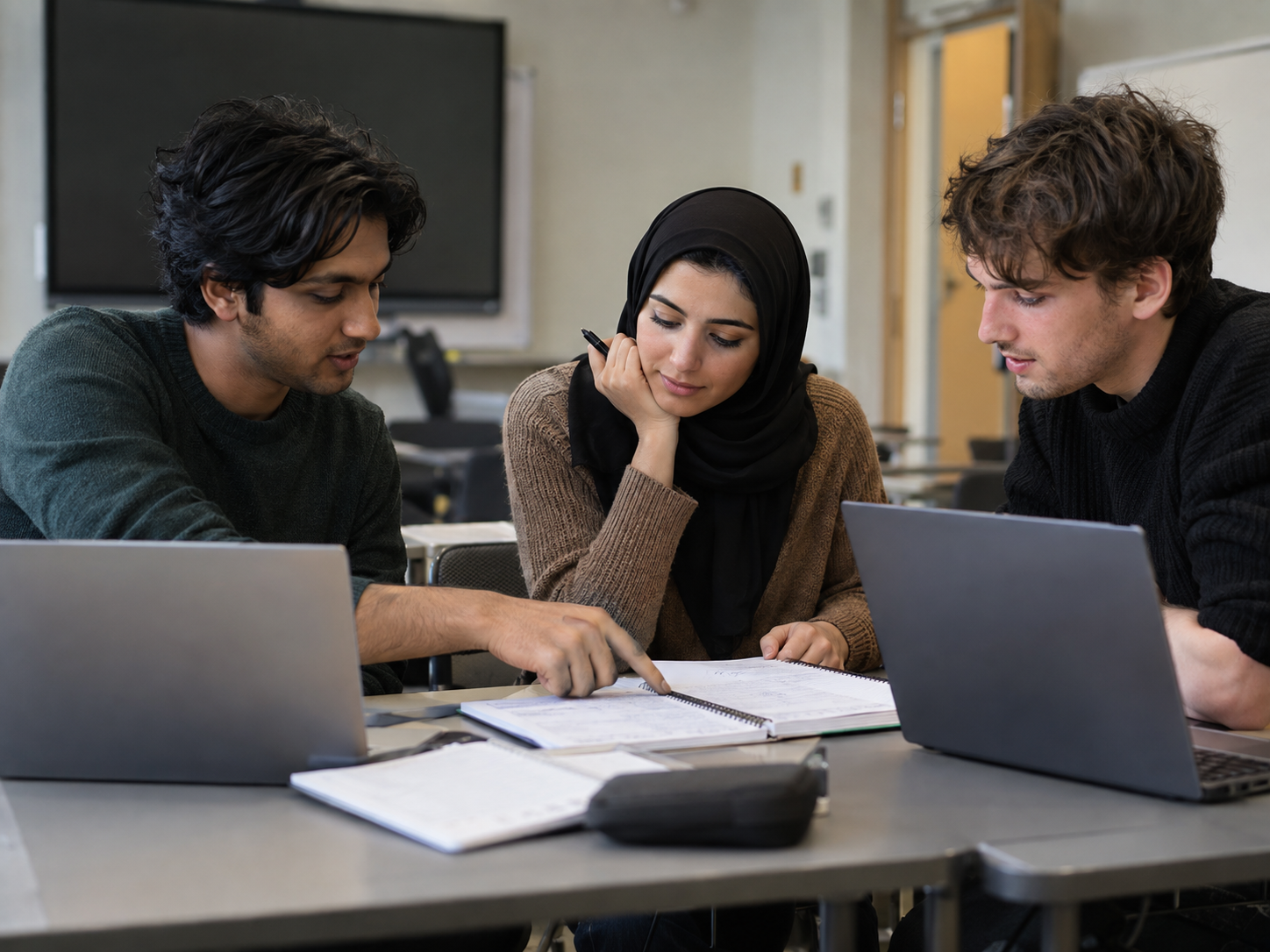
Starting university in the United States can bring many unfamiliar academic expectations. You may understand that copying another person’s work is wrong, but questions about group assignments, paraphrasing, citations, tutoring, online resources, and artificial intelligence can be less obvious. Understanding academic integrity in U.S. universities is therefore an important part of adjusting to American academic life.
International students should not assume that rules from a previous school or country will work exactly the same way in the United States. Requirements can differ between universities, departments, courses, and even individual assignments. Learning the expectations early can help you complete your work confidently and avoid preventable academic problems.
What Does Academic Integrity in U.S. Universities Mean?
Academic integrity generally means completing academic work honestly, accurately representing your own contribution, acknowledging the work and ideas of others, and following the rules established for a course or assignment.
Universities may use terms such as academic honesty, honor code, scholarly integrity, or academic conduct. The exact definitions and disciplinary procedures vary by institution.
Common areas covered by academic integrity policies include:
- Plagiarism
- Cheating on examinations or assignments
- Unauthorized collaboration
- Fabricating or falsifying information or data
- Improperly using another person’s work
- Submitting work in ways that violate course instructions
- Using unauthorized assistance or technology
For example, MIT’s academic integrity rules address plagiarism, unauthorized collaboration, and falsification, while Stanford’s Honor Code identifies plagiarism and unpermitted collaboration among examples of prohibited conduct.
Why Academic Integrity in U.S. Universities Can Feel Confusing
Many international students come from educational systems with different approaches to collaboration, memorization, source use, writing, and classroom discussion. Something that felt normal in one academic environment may require clearer attribution or permission in another.
The challenge is that there is not always one universal rule for every class. For example, collaboration may be encouraged on one project but prohibited on another. Princeton advises students to understand the specific boundaries of permitted collaboration because expectations can vary from course to course.
This is why reading the syllabus and assignment instructions is essential.
1. Understand What Counts as Plagiarism
Plagiarism is more than copying an entire paragraph from a website. It can also involve using someone else’s ideas, words, data, figures, code, or other material without appropriate acknowledgment.
MIT’s academic integrity guidance specifically includes copying material without acknowledgment, incomplete citation, improper paraphrasing, and certain forms of reusing previously submitted work without permission.
How to Reduce the Risk of Plagiarism
- Cite sources when using another person’s ideas or research.
- Use quotation marks when directly quoting where appropriate.
- Paraphrase genuinely rather than changing only a few words.
- Keep track of sources while researching.
- Follow the citation style required by your instructor.
- Ask for clarification when you are uncertain whether citation is required.
2. Do Not Assume Collaboration Is Always Allowed
Studying with classmates can be an important part of university life, but there is a difference between studying together and completing work together.
An instructor might allow students to discuss a concept but require each student to write an independent answer. Another instructor might permit a fully collaborative group project.
Stanford guidance notes that collaboration that is not explicitly permitted may be considered unpermitted academic aid, while Princeton emphasizes that students should understand the boundaries of collaboration for each course.
Before working with classmates, ask:
- Can we discuss the problem?
- Can we compare answers?
- Can we share code?
- Can someone edit my work?
- Must collaboration be acknowledged?
If the instructions are unclear, ask your professor or teaching assistant before submitting the assignment.
3. Understand Citation and Paraphrasing
Many students believe they are safe from plagiarism if they rewrite a source in different words. However, paraphrased ideas may still require citation.
Good academic writing normally makes it clear which ideas come from your own analysis and which come from outside sources.
Your course may require a citation style such as:
- APA
- MLA
- Chicago
- IEEE
- Another discipline-specific style
Do not worry if you are unfamiliar with a citation system. University writing centers, libraries, instructors, and official style guides can help you learn it.
4. Be Careful When Using AI Tools
Generative AI has made academic integrity more complicated because policies can vary significantly between courses.
One instructor may allow AI for brainstorming, another may allow it only with acknowledgment, and another may prohibit it for a particular assignment. Harvard’s current guidance illustrates this variation by providing different models for restrictive, mixed, and permissive course AI policies.
Harvard Graduate School of Education also advises students to ask instructors when they are uncertain whether a particular use of generative AI is permitted.
Before Using AI for Coursework
- Read the syllabus.
- Check the instructions for the specific assignment.
- Find out whether AI assistance must be disclosed or cited.
- Do not assume grammar assistance and content generation are treated the same way.
- Ask the instructor when the policy is unclear.
The safest approach is not to guess.
5. Be Honest With Data, Research, and Results
Academic integrity also applies to laboratories, research projects, surveys, statistics, and other forms of evidence.
Do not invent results because an experiment did not work or because your data does not support your original expectation. MIT includes falsification of information or data within its academic integrity rules.
Unexpected results can still be academically valuable when they are reported accurately.
Common Academic Integrity Mistakes International Students Should Avoid
- Copying text from online sources without citation.
- Changing a few words in a source and treating it as original writing.
- Sharing answers when independent work is required.
- Using another student’s previous assignment as a model too closely.
- Using unauthorized notes or devices during an examination.
- Assuming AI tools are automatically permitted.
- Submitting work created largely by another person.
- Reusing previous coursework without checking whether permission is required.
- Ignoring course-specific collaboration rules.
What Should You Do If You Are Unsure?
Ask before submitting the work. A short question can prevent a much larger problem.
You can contact:
- Your professor
- Your teaching assistant
- Your academic adviser
- Your university writing center
- Your university library
- The office responsible for academic integrity or student conduct
You might simply ask whether collaboration, AI assistance, editing help, or a particular source use is permitted for that assignment.
Practical Tips for Maintaining Academic Integrity
Read Every Syllabus Carefully
Do not assume all professors use the same rules. Pay particular attention to sections about collaboration, citations, examinations, outside assistance, and AI.
Start Assignments Early
Students under deadline pressure may be more tempted to copy, overuse outside assistance, or make citation mistakes. Starting early gives you time to research and ask questions.
Keep Research Notes Organized
Save the details of books, articles, websites, and other sources as you work. This makes proper citation much easier later.
Use University Support Services
Writing centers and libraries can help students improve research, citation, paraphrasing, and academic writing skills without completing the work for them.
Keep Your Own Voice
Your professors expect you to learn. Your writing does not need to sound perfect. Clear, original work that demonstrates your understanding is usually more valuable than complicated writing that does not reflect your own thinking.
Does an Academic Integrity Violation Affect International Students Differently?
Academic disciplinary procedures and consequences depend on the university and the circumstances. Students should therefore consult their institution’s official policy rather than assuming a particular outcome.
If an academic matter could potentially affect enrollment, academic standing, or another requirement connected to international student status, an F-1 student should also speak with the school’s Designated School Official to understand whether there are any separate immigration-related considerations.
Do not rely only on classmates, social media, or online forums when dealing with a serious academic or enrollment issue.
Conclusion
Understanding academic integrity in U.S. universities is not about being afraid of making a mistake. It is about learning how your university expects students to research, write, collaborate, use technology, and present their work honestly.
Read every syllabus carefully, cite sources appropriately, confirm collaboration rules, and check your instructor’s policy before using AI or outside assistance. When something is unclear, asking before submitting an assignment is almost always better than making an assumption.
For international students, these habits can make the transition to the U.S. academic system much easier. Academic integrity becomes less confusing once you understand that the central principle is simple: be transparent about your work, acknowledge the contributions of others, and follow the specific rules of your course.
This article provides general educational information. Academic integrity definitions, procedures, AI policies, and consequences vary between universities and courses. Always review your institution’s current official policies and course instructions.
From university selection and scholarships to F-1 visa interview preparation — expert guidance built for international students.