
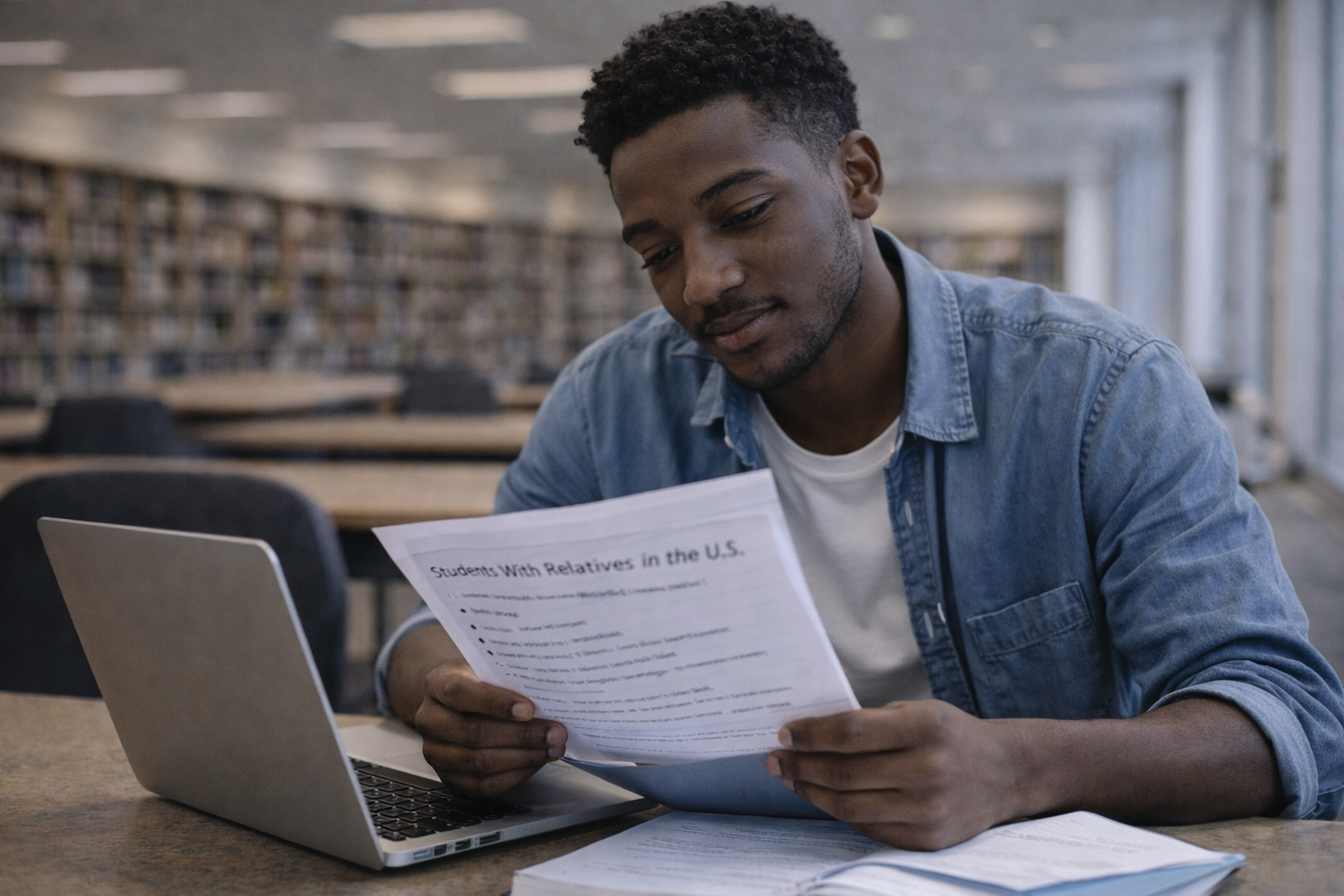
Students with relatives in the U.S. often feel anxious before their F-1 visa interview. A common fear is that having family members in America will automatically lead to refusal. Many applicants worry that the visa officer will assume immigration intent. The reality is more balanced. Students with relatives in the U.S. receive F-1 visas every year. What matters is how clearly and confidently you present your academic purpose and long-term plans.
This guide explains how to address questions about relatives in the U.S. while building a strong and credible student profile.
Does Having Relatives in the U.S. Automatically Lead to Refusal?
No, having relatives in the U.S. does not automatically cause refusal. However, it may lead to additional questions during your interview.
Visa officers may evaluate:
- Who your relatives are (immediate or distant)
- Their immigration status
- Your relationship with them
- Your long-term plans after graduation
The main concern is whether your primary intention is education or long-term settlement. Your job is to show that your purpose is genuine study.
Students With Relatives in the U.S.: What Officers Look For
When reviewing students with relatives in the U.S., officers focus on consistency and credibility.
1. Honest Disclosure
Always disclose relatives if asked. Your DS-160 form includes questions about immediate family members in the United States. Inconsistent answers can create serious problems.
2. Clear Academic Motivation
Your study plan must stand independently of your relatives. Be ready to explain:
- Why this university?
- Why this program?
- How it connects to your background?
- What you plan to do after graduation?
If your academic plan appears weak, officers may question your intentions.
3. Strong Home Country Ties
Strong ties are especially important for students with relatives in the U.S. These may include:
- Family responsibilities in home country
- Career opportunities back home
- Property or business involvement
- Long-term professional goals in your country
Clear post-graduation plans reduce uncertainty.
Different Types of Relatives and How They Affect Your Case
Immediate Family (Parents, Siblings)
If parents or siblings live in the U.S., officers may ask more detailed questions. Be prepared to explain:
- Their visa or immigration status
- Your communication with them
- Whether they will financially support you
Financial sponsorship from relatives is allowed if documentation is clear and credible.
Distant Relatives (Cousins, Uncles, Aunts)
Distant relatives usually raise fewer concerns. Still, answer honestly and briefly.
Keep responses simple and professional.
Common Mistakes Students With Relatives in the U.S. Make
- Hiding or minimizing relationships
- Giving inconsistent answers
- Overemphasizing staying in the U.S. after graduation
- Depending entirely on relatives for financial planning
- Appearing unsure about long-term goals
Clarity and transparency are critical.
Step-by-Step Preparation Strategy
Step 1: Review Your DS-160 Carefully
Ensure all family information is accurate and complete.
Step 2: Prepare Clear 20–30 Second Responses
If asked about relatives, respond calmly and directly without volunteering unnecessary details.
Step 3: Strengthen Academic Justification
Your chosen program should logically connect to your background and career goals.
Step 4: Clarify Financial Arrangements
If a relative is sponsoring you, ensure documentation is strong and realistic.
Practical Interview Advice
- Maintain steady eye contact.
- Answer only what is asked.
- Do not appear defensive.
- Stay calm if questioned about relatives.
- Focus on your education and career goals.
Professional tone and confidence make a strong impression.
Building a Visa-Safe Profile With Relatives in the U.S.
Students with relatives in the U.S. can strengthen their profile by ensuring:
- Logical academic progression
- Clear financial planning
- Strong ties to home country
- Defined post-graduation career plans
When your story flows clearly from education to future goals, family presence becomes just one detail—not a deciding factor.
Final Thoughts: Family Presence Does Not Define Your Intentions
Having relatives in the United States is common. What matters is your academic purpose and long-term plan.
Students with relatives in the U.S. can absolutely succeed in the F-1 visa process when their application reflects clarity, consistency, and genuine educational goals.
Preparation replaces fear. When your study plan stands on its own, your case becomes strong and credible.
From university selection and scholarships to F-1 visa interview preparation — expert guidance built for international students.