
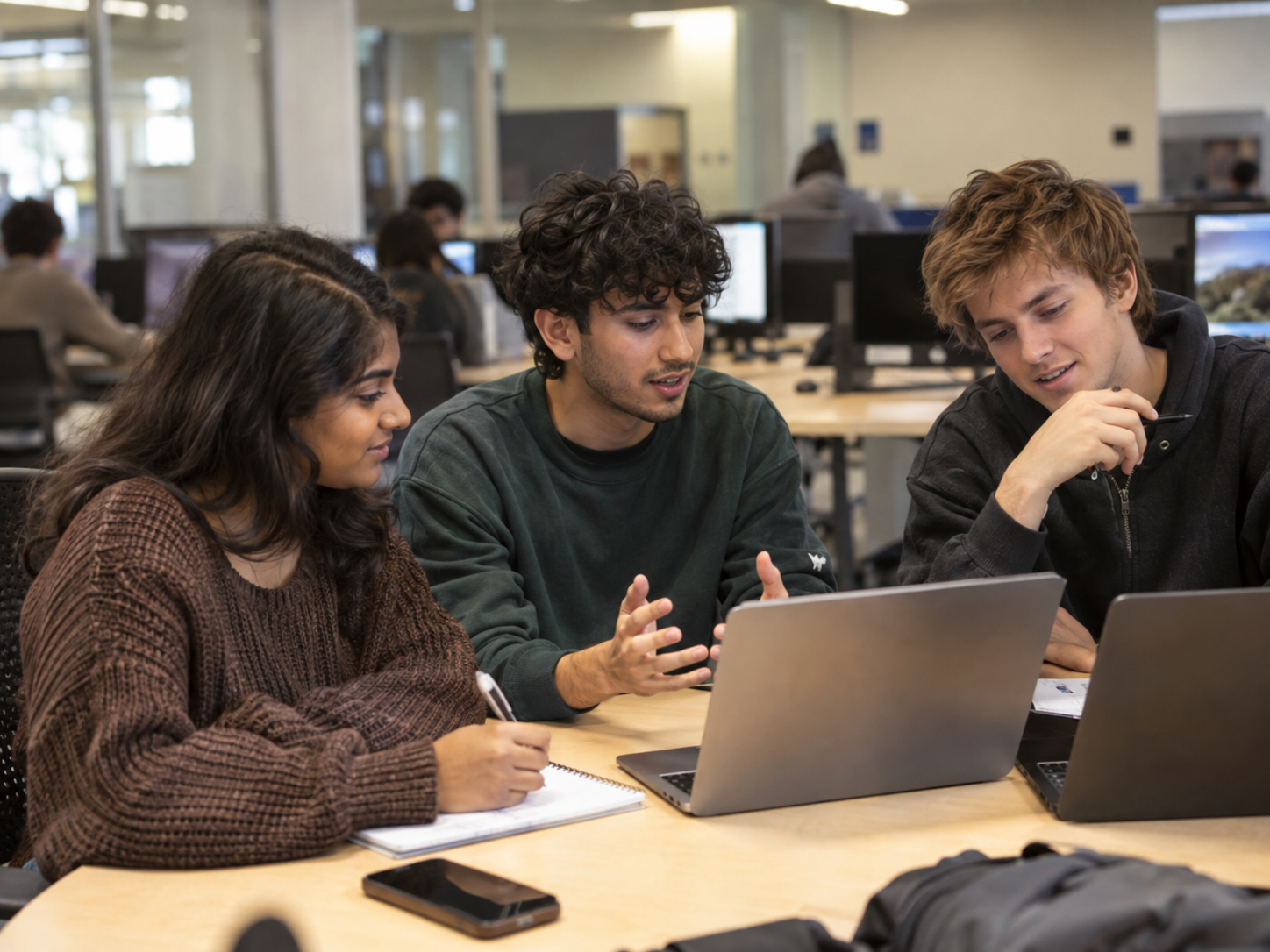
You may have strong grades, technical knowledge, and an impressive degree, but employers often want to know something else: Can you communicate clearly, solve problems, work with other people, and handle responsibility? These abilities are commonly called soft skills. Understanding the soft skills employers value most can help college students and international students prepare for internships, graduate jobs, interviews, and long-term career growth.
Technical skills may help you qualify for a position, but strong workplace skills can influence how effectively you use that knowledge once you join a team. The National Association of Colleges and Employers (NACE) identifies communication, critical thinking, teamwork, professionalism, leadership, career development, and technology among its core career-readiness competencies.
Why the Soft Skills Employers Value Most Matter
Employers are not simply hiring someone to complete isolated tasks. Most jobs require people to communicate with colleagues, respond to changing priorities, make decisions, receive feedback, and solve unexpected problems.
NACE’s 2026 research found that employers continue to place particularly high importance on communication, teamwork, professionalism, and critical thinking among new graduates. LinkedIn’s 2026 Skills on the Rise research also highlights growing demand for people-focused abilities such as cross-functional collaboration, team management, mentorship, and stakeholder communication.
For students, this means career preparation should include both technical knowledge and the ability to demonstrate how you work with people and approach problems.
10 Soft Skills Employers Value Most
1. Communication
Communication is much more than speaking fluent English or giving presentations. It includes listening carefully, explaining ideas clearly, asking useful questions, writing professional messages, and adapting your communication to different audiences.
You can develop communication skills through presentations, class discussions, student organizations, part-time jobs, internships, and group assignments.
2. Critical Thinking
Employers need people who can evaluate information instead of simply following instructions. Critical thinking involves understanding a situation, identifying relevant information, comparing possible solutions, and making a reasonable decision.
When discussing a university project in an interview, explain not only what you created but also the problem you faced, the alternatives you considered, and why you chose your final approach.
3. Teamwork
Modern workplaces often bring together people with different technical backgrounds, personalities, cultures, and responsibilities. Effective teamwork means contributing your share while also listening to others and supporting the overall goal.
Students can demonstrate teamwork by describing group projects, research teams, volunteer activities, competitions, student societies, or internships.
4. Professionalism
Professionalism includes reliability, preparation, accountability, attention to detail, and appropriate workplace behavior. Small habits can communicate professionalism before you have years of experience.
- Arrive prepared for meetings and interviews.
- Meet agreed deadlines.
- Respond professionally to messages.
- Admit mistakes and correct them.
- Follow through on commitments.
5. Adaptability
Workplaces change. Teams adopt new software, priorities shift, projects develop unexpected problems, and employees may need to learn unfamiliar processes quickly.
Adaptability does not mean accepting every change without question. It means being willing to learn, reconsider your approach, and remain productive when circumstances change.
6. Problem-Solving
Employers usually prefer employees who can investigate problems instead of immediately waiting for someone else to provide every answer.
Develop a simple habit: define the problem, gather relevant information, identify possible solutions, test the best option, and review the result. Academic assignments, coding projects, laboratory work, case studies, and internships can all provide useful examples.
7. Emotional Intelligence
Work involves people, and people do not always agree. Emotional intelligence can include recognizing your own reactions, understanding other perspectives, receiving criticism constructively, and managing disagreements professionally.
You do not need to agree with everyone. The useful skill is learning how to disagree respectfully while keeping the conversation focused on the work.
8. Time Management
Employers expect people to manage competing responsibilities. Students already practice this when balancing classes, assignments, examinations, research, employment, and extracurricular activities.
Instead of simply telling an interviewer that you have good time-management skills, provide an example of how you planned multiple responsibilities and still completed important work on schedule.
9. Leadership
Leadership does not require a manager title. Students can demonstrate leadership when they organize a project, help a struggling teammate, coordinate responsibilities, mentor another student, or take responsibility for moving a group toward its goal.
NACE describes leadership partly in terms of recognizing team strengths, motivating others, using feedback, managing projects, and working toward organizational goals.
10. Willingness to Learn
Graduation does not mean learning is finished. Technology, industries, and job requirements continue to change. Employees who can learn unfamiliar tools and accept constructive feedback may be better prepared to adjust as their roles develop.
Show this skill through examples such as completing a certification, learning software independently, improving after feedback, or teaching yourself a skill required for a project.
How International Students Can Develop the Soft Skills Employers Value Most
International students may already be developing valuable workplace abilities without realizing it. Studying in another country can involve adapting to new classroom expectations, communicating across cultures, managing responsibilities independently, and collaborating with people from different backgrounds.
You can intentionally build these skills by:
- Participating actively in class discussions and presentations.
- Joining student organizations or professional associations.
- Working on team-based academic projects.
- Attending university career workshops.
- Practicing interviews with a career adviser.
- Seeking feedback from professors, supervisors, and teammates.
- Taking leadership roles in student activities when appropriate.
How to Show Soft Skills on a Resume
Avoid filling your resume with unsupported phrases such as “excellent communicator,” “team player,” or “strong leader.” Show the skill through an accomplishment.
For example, instead of writing:
Weak: Strong teamwork and communication skills.
You could describe an actual experience:
Stronger: Collaborated with a four-member project team to research, design, and present a semester-long data analysis project.
The second version gives the employer evidence instead of asking them to accept a claim.
How to Demonstrate Soft Skills During an Interview
Prepare short examples before your interview. Many employers use behavioral questions such as:
- Tell me about a time you solved a difficult problem.
- Describe a disagreement within a team.
- Tell me about a time you received critical feedback.
- Give an example of when you had several deadlines at once.
- Describe a time you showed leadership.
A useful approach is the STAR structure: explain the situation, your task, the action you took, and the result. Keep your example focused on what you actually did.
Common Mistakes Students Should Avoid
- Listing soft skills without providing examples.
- Assuming technical ability alone will demonstrate career readiness.
- Calling yourself a leader without explaining what you led.
- Using the same example for every interview question.
- Ignoring communication because English is not your first language.
- Exaggerating responsibilities or accomplishments.
- Waiting until graduation to begin developing workplace skills.
Practical Advice: Build Evidence, Not Just a Skills List
Create a simple skills record while you are in college. After an important project, internship, volunteer activity, or part-time job, write down the challenge, what you did, which skills you used, and what happened afterward.
Over time, you will build a collection of real examples that can be adapted for resumes, cover letters, networking conversations, and interviews.
You do not need to master every soft skill immediately. Identify two or three areas that need improvement and intentionally practice them during your next semester, internship, or project.
Conclusion
The soft skills employers value most include communication, critical thinking, teamwork, professionalism, adaptability, problem-solving, emotional intelligence, time management, leadership, and continuous learning. These skills are not separate from your academic education; many can be developed through the experiences you already have as a student.
Your goal is not simply to write these abilities on a resume. Build experiences that demonstrate them. When you can explain clearly how you communicated, collaborated, solved a problem, adapted, or took responsibility, employers can better understand what you may contribute in the workplace.
From university selection and scholarships to F-1 visa interview preparation — expert guidance built for international students.