
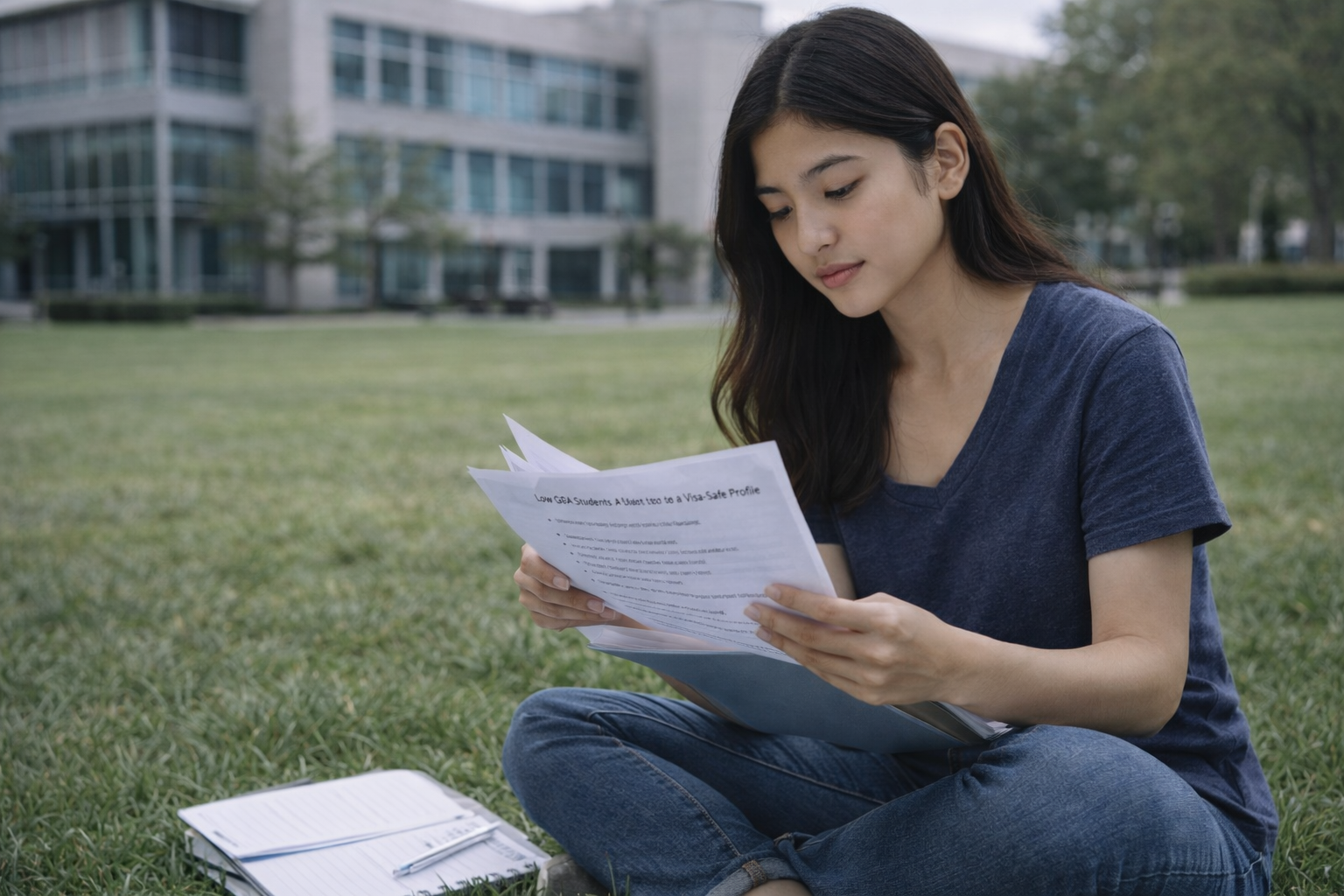
If you are a low GPA student preparing for your F-1 visa interview, you may feel anxious. You might wonder, “Will my grades ruin my chances?” Many international students believe that a low GPA automatically leads to visa refusal. The truth is more nuanced. A low GPA does not automatically mean rejection, but it does require a stronger overall profile. This guide explains how low GPA students can build a visa-safe profile in a smart, practical way.
Understanding How Visa Officers View Low GPA Students
Visa officers do not approve or refuse cases based on GPA alone. Instead, they evaluate whether you are a genuine student with realistic academic plans and clear career goals. When they see a low GPA, they may look deeper into:
- Your academic consistency
- The reasons behind weak performance
- Your chosen program in the United States
- Your financial preparedness
- Your long-term career plans
A low GPA can raise questions, but questions are not the same as automatic refusal. Your goal is to prepare clear, confident answers that explain your academic journey honestly.
How to Build a Visa-Safe Profile with a Low GPA
Low GPA students must strengthen other parts of their application. Think of your profile as a complete picture, not just one number.
1. Show Academic Improvement
If your grades improved over time, highlight that progress. For example:
- Better performance in later semesters
- Strong grades in major-related subjects
- Additional certifications or diplomas
Improvement shows maturity and growth. It tells the officer that you learned from earlier mistakes.
2. Choose the Right Program
Your selected program must make sense based on your background. A mismatch between your past education and your future plans creates doubt.
For example:
- If your GPA is low in engineering, switching to business should have a logical explanation.
- If you struggled academically, selecting a highly competitive program may raise concerns.
Make sure your new program aligns with your strengths and career direction.
3. Prepare a Clear Academic Explanation
Be honest but concise. Do not blame teachers or circumstances aggressively. Instead:
- Acknowledge responsibility
- Explain any genuine challenges (health, family, adjustment issues)
- Show what changed and how you improved
Confidence and clarity matter more than perfection.
4. Strengthen Your English Proficiency
Strong TOEFL, IELTS, or Duolingo scores can offset a weak GPA. They demonstrate that you are academically capable in an English-speaking environment.
High language scores reassure the visa officer that you can succeed in U.S. classrooms.
5. Demonstrate Financial Clarity
Low GPA students sometimes face additional scrutiny. Financial documentation must be clear and consistent:
- Reliable sponsor information
- Logical source of funds
- Transparent bank documentation
Financial confusion combined with weak academics increases risk.
Common Mistakes Low GPA Students Make
Many second or first-time refusals happen because students repeat the same errors.
- Over-explaining their GPA with long emotional stories
- Blaming universities or teachers
- Choosing random programs just to “get admission”
- Memorizing scripted answers
- Ignoring strong ties to home country
Your explanation should be structured, calm, and professional.
Step-by-Step Strategy Before Your Interview
Step 1: Audit Your Profile
List your strengths and weaknesses honestly. Identify where you need improvement.
Step 2: Refine Your Study Plan
Prepare clear answers to:
- Why this university?
- Why this program?
- How does it connect to your past education?
- What will you do after graduation?
Step 3: Practice Clear Communication
Confidence is critical. Even a low GPA student can appear credible if answers are structured and natural.
Step 4: Align Career Goals
Your long-term plan should focus on returning home and applying your U.S. education meaningfully. Strong career clarity strengthens your overall visa-safe profile.
Practical Advice for Interview Day
- Dress professionally but comfortably.
- Answer directly and briefly.
- Do not volunteer unnecessary negative details.
- Maintain calm body language.
- Stay respectful and composed.
If asked about your GPA, respond confidently. Avoid defensive tones. A simple structure works best:
Acknowledge → Brief explanation → Improvement → Future readiness
This approach shows maturity rather than insecurity.
Can Low GPA Students Still Get Approved?
Yes, many low GPA students receive F-1 visas each year. What makes the difference is preparation. Visa officers evaluate credibility, clarity, and consistency.
A visa-safe profile includes:
- Logical academic path
- Clear financial documentation
- Strong English skills
- Defined career goals
- Honest explanations
Your GPA is one factor—not the entire decision.
Final Thoughts: Your GPA Is Not Your Future
Receiving a low GPA in the past does not define your academic future. What matters is how you present growth, direction, and seriousness. Many successful students started with weak academic records but built strong, well-prepared visa profiles.
Focus on clarity, alignment, and confidence. When your study plan makes sense and your answers are structured, you reduce risk significantly.
A low GPA requires smarter preparation—but it does not close the door to studying in the United States.
From university selection and scholarships to F-1 visa interview preparation — expert guidance built for international students.