
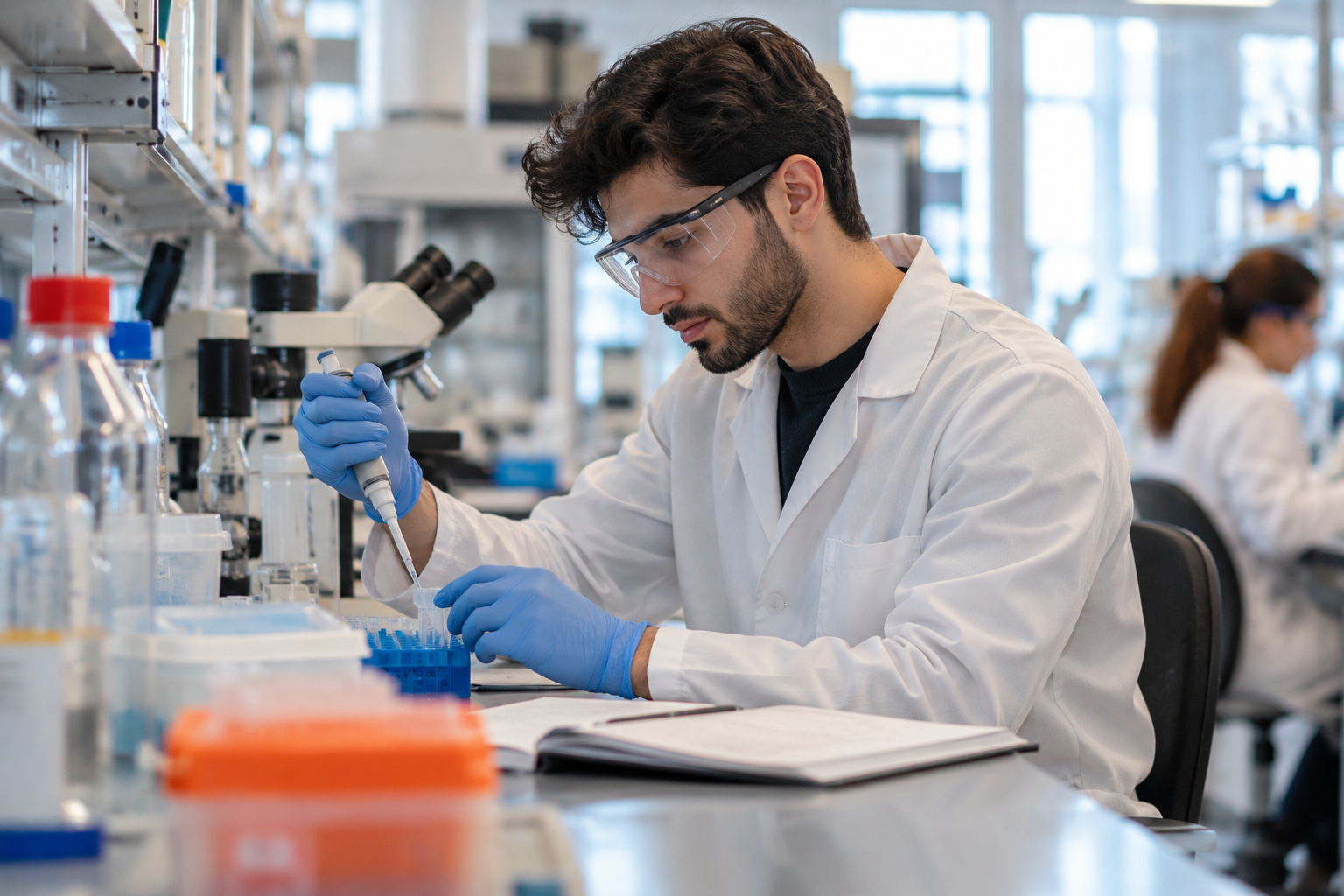
You may have strong grades and a good academic record, but when you begin exploring research-focused master’s programs, PhD opportunities, or future academic careers, another question often appears: How do you build a competitive research profile?
The good news is that a research profile is not built through one impressive achievement. It develops gradually through research experience, relevant skills, mentorship, thoughtful projects, presentations, writing, and evidence that you can engage seriously with academic questions. For international students, starting early and building depth over time can make the process much more manageable.
What Is a Competitive Research Profile?
A research profile is the collection of experiences and skills that demonstrates your ability and interest in research. It can include formal laboratory work, independent projects, faculty-led research, a thesis, conference presentations, publications, technical skills, research methods, and other scholarly activities.
Importantly, a strong research profile is not simply a long list of publications.
The U.S. National Science Foundation describes undergraduate research experiences as opportunities where students conduct authentic research, receive mentoring, develop research skills, and learn about educational and career pathways. This highlights an important principle: meaningful participation and skill development matter.
Your goal should therefore be to demonstrate progression. Ideally, your experiences show that you moved from learning basic research methods to contributing meaningfully to research questions, analysis, interpretation, and communication.
How to Build a Competitive Research Profile Step by Step
1. Start by Identifying Your Research Interests
You do not need a perfectly defined research specialization when you begin. However, having a general direction makes it easier to find relevant opportunities.
Ask yourself:
- Which subjects from my courses genuinely interest me?
- What problems do I enjoy investigating?
- Which professors are working on topics I find interesting?
- What research papers or projects have captured my attention?
- Which technical or analytical skills would help me explore these questions?
For example, saying that you are interested in “computer science” is extremely broad. Over time, you might discover a stronger interest in machine learning, cybersecurity, human-computer interaction, natural language processing, or another area.
Your interests can change. The purpose of this step is to give your early research activities some direction.
2. Develop the Skills Your Field Actually Uses
Research requires more than subject knowledge. Depending on your discipline, useful research skills might include:
- Academic literature searching
- Critical reading
- Research methodology
- Data collection
- Statistical analysis
- Programming
- Laboratory techniques
- Qualitative research methods
- Academic writing
- Data visualization
- Presentation skills
Do not collect skills simply to fill your CV. Try to use them in actual academic work. Completing a statistics course is useful; applying statistical methods to a research question demonstrates how you can use that knowledge.
3. Find a Research Mentor
A supportive faculty mentor can be one of the most valuable parts of your research development.
Look through your department’s faculty pages and identify professors whose work overlaps with your interests. Before contacting someone, read about their current research and, when possible, review one or two of their recent publications.
Then send a concise, personalized message explaining:
- Who you are
- Your academic background
- What part of their research interests you
- Relevant skills or coursework you already have
- Why you would like research experience
- How you might contribute or learn
A generic email sent to dozens of professors is usually less useful than a thoughtful message showing genuine familiarity with someone’s work.
4. Get Real Research Experience
Once you understand your interests and have developed some foundational skills, look for opportunities to participate in actual research.
Possibilities may include:
- Faculty research projects
- University laboratories
- Independent studies
- Capstone projects
- Undergraduate or master’s theses
- Research assistant positions
- Summer research programs
- Research-oriented internships
Eligibility varies significantly between programs. For example, NSF’s Research Experiences for Undergraduates program provides structured research and mentoring opportunities, but NSF states that undergraduate participants in REU Sites and Supplements must be U.S. citizens, U.S. nationals, or permanent residents. International students should therefore verify eligibility before applying and also explore opportunities offered directly by their own institutions, faculty members, laboratories, or other programs.
How to Build a Competitive Research Profile Without Publications
One common mistake is believing that you do not have a research profile unless your name appears on published papers.
Research output can take several forms. Depending on your field and career stage, your profile may include:
- A strong thesis or capstone project
- A research poster
- A conference presentation
- A technical report
- A reproducible research project
- Documented datasets or code, when appropriate
- Substantial laboratory or field experience
- Research-related academic writing
Publications can certainly become meaningful evidence of research contribution, but authorship should represent genuine intellectual or research contribution rather than simply becoming a credential to collect. NIH resources on responsible research emphasize responsible authorship, data management, research integrity, rigor, and appropriate research practices.
5. Learn to Read Research Papers Critically
Reading academic literature regularly helps you understand how researchers identify problems, develop methods, analyze evidence, and communicate findings.
Instead of reading papers passively, ask:
- What problem is this study addressing?
- Why is the problem important?
- What research question or hypothesis is being examined?
- Which methodology was used?
- What are the main findings?
- What limitations remain?
- What could researchers investigate next?
Over time, this habit can help you move from consuming existing knowledge to identifying research gaps and developing your own questions.
6. Present Your Research When Appropriate
Research communication is an important skill. If your project reaches an appropriate stage, ask your supervisor whether there are opportunities to present it through a departmental event, research symposium, poster session, seminar, or relevant academic conference.
Presenting research can help you learn how to explain complicated ideas clearly, respond to questions, receive feedback, and interact with other researchers.
7. Keep an Organized Record of Your Research Work
Do not wait until graduate applications begin to reconstruct several years of academic activity.
Maintain a research record containing information such as:
- Project title
- Research question
- Supervisor or research group
- Your specific responsibilities
- Methods and tools used
- Skills developed
- Major results or outcomes
- Presentations or publications
- Relevant links, where appropriate
This information can later make it much easier to prepare your CV, statement of purpose, research statement, portfolio, and graduate applications.
Common Mistakes When Building a Research Profile
Chasing Quantity Instead of Depth
Five disconnected projects are not automatically more valuable than one substantial project in which you developed meaningful research skills and increasingly independent responsibilities.
Contacting Professors Without Researching Their Work
A message that could be sent unchanged to any professor rarely demonstrates genuine research interest. Personalize your communication around the faculty member’s actual research.
Focusing Only on Publications
Publishing is only one possible outcome of research. Developing methodology, analytical thinking, research integrity, technical competence, and communication skills can also be important parts of your development.
Ignoring Research Ethics
Research integrity is fundamental. NIH guidance highlights areas such as responsible authorship, data management and sharing, conflicts of interest, research misconduct, human and animal research protections, and mentor-mentee responsibilities as important parts of responsible research training.
Exaggerating Your Contribution
Describe exactly what you did. If you assisted with data collection, do not describe yourself as having designed the entire study. Clear descriptions of genuine contributions are more credible than inflated claims.
Practical Advice for International Students
If you are still early in your degree, you do not need to accomplish everything immediately. Build your profile progressively.
A practical sequence could be:
- Explore potential research areas.
- Read introductory papers in those areas.
- Develop relevant technical and research skills.
- Identify suitable faculty mentors.
- Join a project or begin supervised research.
- Take responsibility for increasingly meaningful tasks.
- Document your methods, contributions, and results.
- Present or publish the work when appropriate.
- Use what you learned to identify your next research question.
If you plan to apply to U.S. graduate programs, start early. EducationUSA notes that U.S. applications take time and can involve recommendations, essays, academic records, and other institution-specific requirements. Each university and program establishes its own application requirements, so always review the official program pages before deciding what materials or experiences you need.
A Competitive Research Profile Takes Time to Build
Learning how to build a competitive research profile is less about collecting impressive labels and more about becoming a stronger researcher over time.
Start with curiosity. Learn how research works. Develop useful skills. Find mentors. Participate in meaningful projects. Keep careful records. Communicate your findings responsibly. Most importantly, understand the research you have done well enough to explain your contribution, what you learned, and what questions you want to investigate next.
You do not need to begin with publications, major conferences, or years of laboratory experience. A research profile grows one meaningful experience at a time. Consistent development, genuine intellectual curiosity, responsible research practices, and increasing independence can give you a much stronger foundation for future graduate study and research opportunities.
Official Resources
- EducationUSA – Complete Your U.S. Application
- U.S. National Science Foundation – Research Experiences for Undergraduates
- National Institutes of Health – Responsible Conduct of Research
From university selection and scholarships to F-1 visa interview preparation — expert guidance built for international students.