
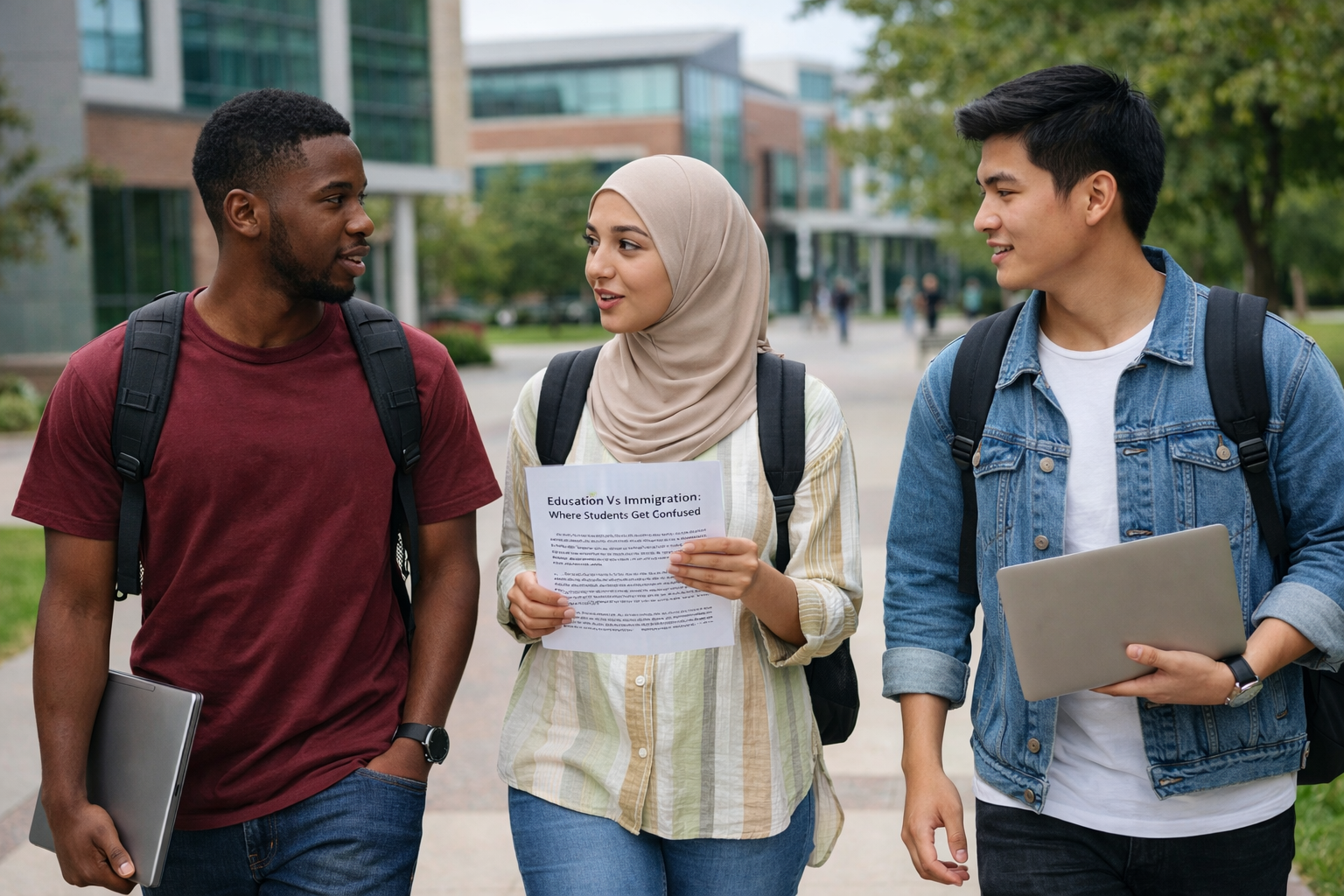
Many international students dream of studying in the United States. They work hard to secure admission, prepare finances, and attend their visa interview with hope. Yet during the interview, some students unknowingly send the wrong message. The confusion between education goals and immigration intentions is one of the most common reasons visa officers develop doubts.
This misunderstanding often happens because students mix long-term career dreams with the purpose of the F-1 visa. Understanding the difference between education and immigration expectations can help applicants communicate their plans more clearly and confidently during the visa interview.
Understanding Education vs Immigration in the F-1 Visa Process
The F-1 visa is designed for students whose primary purpose is education. It allows international students to study at accredited U.S. institutions for a specific academic program.
However, under U.S. visa regulations, applicants must also demonstrate that they intend to return to their home country after completing their studies. This requirement often creates confusion for students who see studying abroad as a pathway to broader opportunities.
In simple terms:
- The visa category is for education, not immigration.
- Your academic purpose should be clear and realistic.
- Your long-term plans should show a connection to your home country.
When students unintentionally focus too much on immigration-related outcomes, it can raise concerns during the visa interview.
Why Students Often Mix Education Goals With Immigration Plans
Many genuine students become confused because they hear about career opportunities, work authorization programs, and long-term possibilities in the United States. These discussions are common online and among friends.
However, visa officers evaluate applicants based on their current academic intent, not hypothetical future immigration pathways.
1. Overemphasis on Jobs Instead of Studies
Some students talk extensively about jobs, salaries, or staying in the U.S. permanently. While career aspirations are natural, focusing too much on employment rather than education can create the impression that studying is not the primary goal.
2. Misunderstanding Optional Practical Training (OPT)
Programs like Optional Practical Training allow students to gain limited work experience related to their field of study. But OPT is still connected to education. Presenting it as a long-term employment plan can confuse the purpose of the visa.
3. Advice From Unreliable Sources
Students often receive conflicting advice from forums, social media, or acquaintances. Some suggestions encourage highlighting immigration benefits rather than focusing on academic objectives.
4. Unclear Career Plans Back Home
Many students genuinely intend to return home but struggle to explain how their U.S. degree connects to opportunities in their country. Without a clear explanation, visa officers may see uncertainty.
How to Clearly Communicate Education Goals During the Interview
Understanding the difference between education and immigration expectations helps students prepare better answers. The goal is not to memorize responses but to explain your academic journey clearly.
Step 1: Explain Your Academic Motivation
Be ready to discuss why you chose your program and university. Your answer should show genuine academic interest.
- Why this field of study?
- Why this particular university?
- How does this program fit your academic background?
Step 2: Connect Your Degree to Your Home Country
Visa officers often look for logical career plans after graduation. Showing how your degree benefits your future in your home country helps clarify your intentions.
- Explain the job market in your country.
- Describe how your new skills will help you professionally.
- Mention industries or opportunities where your degree is valuable.
Step 3: Keep the Focus on Education
During the interview, education should remain the central theme of your answers. Even when discussing career goals, connect them back to your studies.
Step 4: Answer Questions Directly
Visa interviews are usually brief. Clear, calm, and concise answers help avoid misunderstandings.
Common Mistakes Students Make
Students sometimes unintentionally create confusion by focusing on the wrong points during their interview.
- Talking too much about staying in the United States permanently
- Emphasizing salaries or job opportunities instead of education
- Giving vague or generic answers about their academic plans
- Repeating memorized responses that sound unnatural
- Not explaining how their degree connects to their future
These mistakes do not necessarily mean a student lacks genuine intentions, but they can create uncertainty during the short interview.
Practical Advice for Future Applicants
Students can avoid confusion between education and immigration goals by preparing thoughtfully before the interview.
- Understand your academic program thoroughly.
- Be able to explain your study plan clearly.
- Focus on education when answering questions.
- Keep your answers natural rather than memorized.
- Practice explaining your career goals confidently.
Preparation should focus on clarity rather than complicated explanations.
Final Thoughts
The difference between education and immigration intentions is one of the most misunderstood aspects of the F-1 visa interview. Many students who face difficulties during the process simply did not realize how their answers might be interpreted.
By keeping the focus on your academic goals, explaining your study plans clearly, and connecting your education to your future at home, you can present your story more effectively.
Remember that the interview is not about proving perfection. It is about communicating your genuine educational journey in a clear and confident way.
From university selection and scholarships to F-1 visa interview preparation — expert guidance built for international students.