
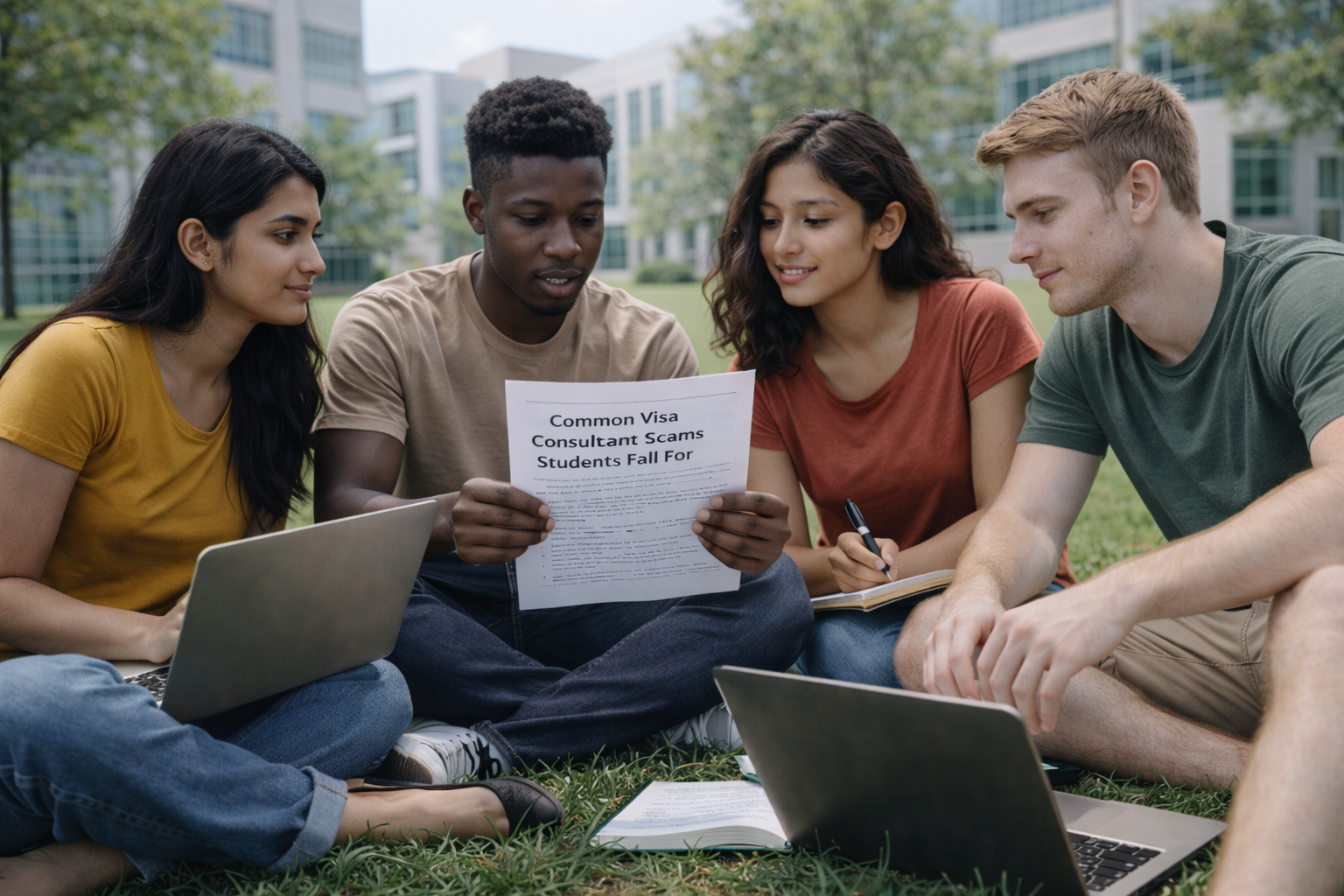
Every year, thousands of international students begin the journey of applying for a U.S. student visa. The process can feel overwhelming, especially for first-time applicants who are unfamiliar with immigration procedures. Because of this uncertainty, many students turn to visa consultants for guidance.
While some consultants provide legitimate services, others unfortunately take advantage of students’ lack of information. Understanding common visa consultant scams students fall for can help applicants make safer decisions and avoid costly mistakes during the F-1 visa process.
Why Students Become Targets for Visa Consultant Scams
International students often face pressure to secure university admission, prepare documents, and schedule visa interviews within tight timelines. This urgency can make students more vulnerable to misleading promises.
Some consultants exploit these fears by presenting themselves as experts who can “guarantee” visa approvals or manipulate the system. In reality, visa decisions are made by U.S. consular officers, and no consultant can promise an approval.
Understanding the warning signs of fraud can help students protect themselves.
Common Visa Consultant Scams Students Fall For
Many scams follow similar patterns. Below are some of the most common ones reported by students.
1. “Guaranteed Visa Approval” Claims
One of the most common visa consultant scams students fall for is the promise of guaranteed visa approval.
Consultants may claim they have special connections with embassies or insider knowledge that ensures approval. In reality, no consultant, agency, or university can guarantee a visa outcome.
- Visa decisions depend on the applicant’s situation and interview
- Embassy officers make independent decisions
- No third party can influence the result
2. Fake Admission Letters
Another dangerous scam involves providing students with fake admission offers from universities that either do not exist or are not authorized to enroll international students.
Students sometimes discover the problem only when they try to apply for a visa or contact the university.
Always verify admissions directly through the official university website.
3. Fabricated Financial Documents
Some consultants encourage students to submit altered or fake financial documents to demonstrate proof of funds.
This is extremely risky. Providing incorrect documents can cause serious immigration consequences and may affect future visa applications.
Students should always submit authentic financial records.
4. False Information on Application Forms
Another common issue occurs when consultants fill out visa forms incorrectly or add inaccurate details without the student fully understanding what was submitted.
This may include:
- Incorrect education history
- False employment information
- Incorrect personal details
Students should review every application before submission.
5. Charging Large Fees for Free Government Services
Some agencies charge excessive fees for services that are already publicly available.
For example, official visa information, appointment booking, and application instructions are provided through government websites.
Paying for guidance is a personal choice, but students should be cautious about inflated service claims.
Warning Signs of Potential Visa Consultant Fraud
Recognizing suspicious behavior early can help students avoid problems. Some warning signs include:
- Promises of guaranteed visa approval
- Pressure to sign contracts quickly
- Requests to submit altered documents
- Lack of transparency about universities
- Unclear fee structures
If a consultant discourages you from verifying information independently, that may be a red flag.
How Students Can Protect Themselves
There are several practical steps students can take to reduce the risk of falling victim to visa consultant scams.
Verify Universities Directly
Always check university information through official websites. Confirm that the school is authorized to enroll international students and issue the Form I-20.
Read Application Forms Yourself
Even if someone assists with paperwork, students should carefully review every form before submitting it.
Use Official Government Resources
Government websites provide detailed information about the student visa process, including required documents and application procedures.
Speak with Current Students or Alumni
Talking to students who have already completed the visa process can help applicants understand what to expect.
Practical Advice for Students Planning to Study in the U.S.
The safest approach to studying abroad is to stay informed and actively participate in your own application process.
- Research universities independently
- Understand the F-1 visa application steps
- Keep copies of all documents submitted
- Ask questions whenever something seems unclear
Being informed helps students make confident decisions.
Conclusion
The dream of studying in the United States is exciting, but the process should always be handled carefully and responsibly. By understanding common visa consultant scams students fall for, applicants can protect themselves from misleading promises and risky shortcuts.
International students who stay informed, verify information independently, and participate actively in their applications are better prepared to navigate the F-1 visa journey safely and confidently.
From university selection and scholarships to F-1 visa interview preparation — expert guidance built for international students.