
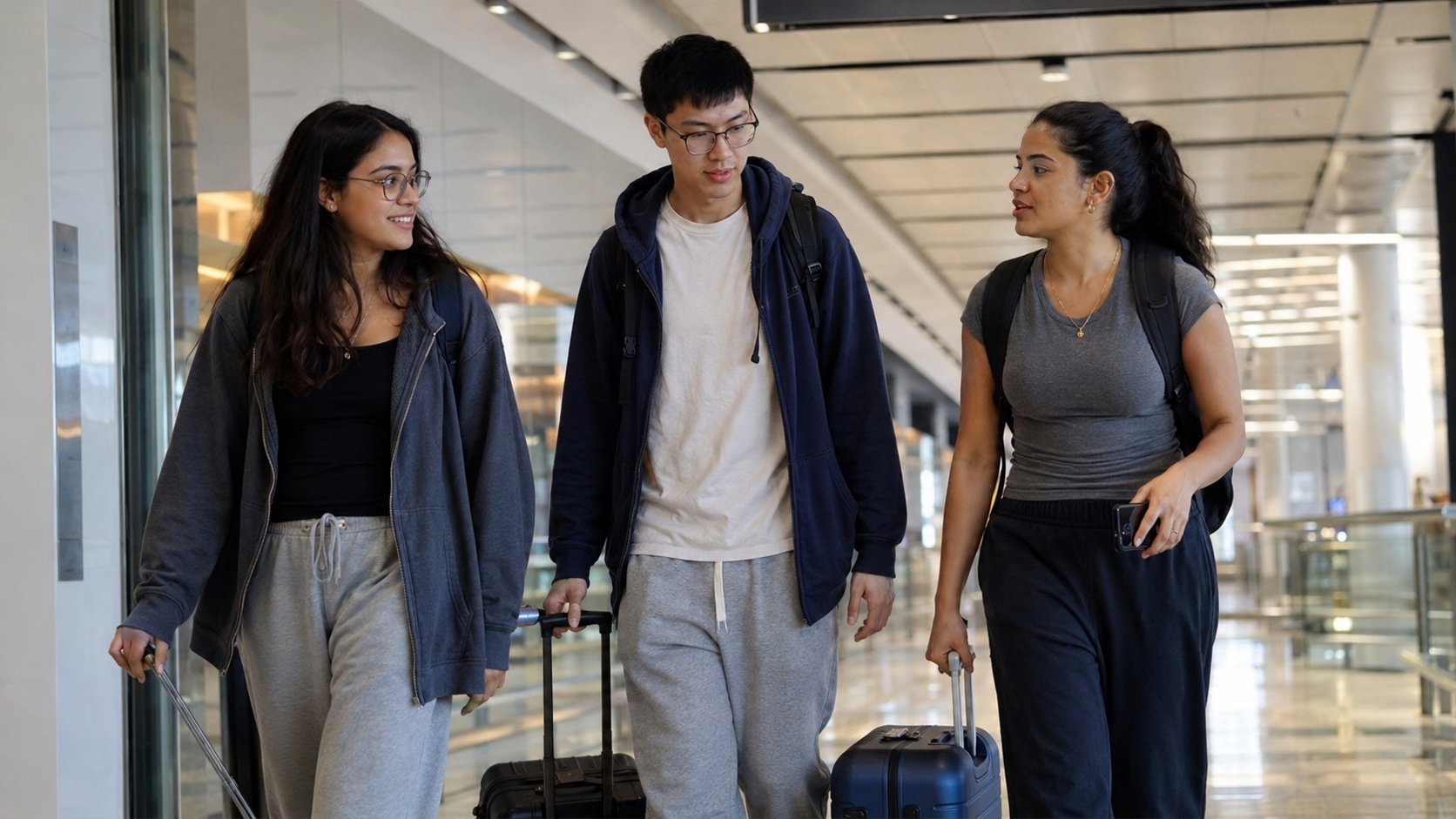
Arriving in the United States for the first time can feel exciting and stressful at the same time. After a long flight, you may be tired, nervous, and unsure what will happen at the airport. Many international students worry about how to clear U.S. immigration at the airport, what questions the officer may ask, and which documents they should show.
The good news is that the process is usually manageable when you are prepared. For F-1 students, the main goal is to clearly show that you are entering the U.S. to study at the school listed on your Form I-20. This guide explains the airport immigration process step by step, in simple language, so you can arrive with more confidence.
How to Clear U.S. Immigration at the Airport as an F-1 Student
When your flight lands in the United States, you will go through U.S. Customs and Border Protection inspection before leaving the airport arrival area. A CBP officer will review your documents and decide whether you can be admitted into the United States in F-1 status.
For F-1 students, the most important documents usually include your valid passport, valid F-1 visa, and Form I-20 issued by your U.S. school. The U.S. Department of State explains that after you present your passport, visa, and Form I-20 at the port of entry, a CBP official makes the admission decision and may provide an admission stamp or Form I-94 record.
This is why preparation matters. You do not need to memorize a speech. You simply need to carry the right documents, answer honestly, and stay calm during the inspection.
Documents to Keep Ready Before You Land
Do not pack your important documents in checked luggage. Keep them in your hand carry or personal bag because you will need them before collecting checked bags at many airports.
Important documents to keep ready include:
- Valid passport.
- Valid F-1 visa stamp, unless you are from a visa-exempt category.
- Signed Form I-20 from the school you plan to attend.
- Admission letter or enrollment confirmation.
- SEVIS I-901 fee receipt.
- Financial documents showing funds for study and living expenses.
- U.S. address where you will stay after arrival.
- School contact information, including international student office details.
- Travel itinerary and connecting flight details, if applicable.
Study in the States explains that F and M students need Form I-20, and students should check that the information on the form is correct. Your Form I-20 is one of the most important documents in your F-1 student journey.
Step-by-Step: What Happens at U.S. Airport Immigration?
Step 1: Follow Signs for Immigration or Passport Control
After leaving the aircraft, follow airport signs for immigration, passport control, or arrivals. You may be directed to a line for visitors or non-U.S. citizens. Some airports also use kiosks or automated systems before you meet an officer.
Stay patient. Lines can be long, especially during busy travel seasons. Keep your documents organized and avoid using your phone in restricted inspection areas unless airport signs clearly allow it.
Step 2: Present Your Passport, Visa, and I-20
When it is your turn, greet the officer calmly and present your passport, F-1 visa, and Form I-20. If the officer asks for additional documents, provide them clearly and respectfully.
You do not need to hand over every document immediately unless requested. Keep supporting documents ready in case the officer asks for proof of admission, financial support, school address, or SEVIS payment.
Step 3: Answer Questions Clearly and Honestly
The officer may ask a few simple questions to confirm your travel purpose. Common questions may include:
- Why are you coming to the United States?
- Which university or college will you attend?
- What is your major or program?
- When does your program start?
- Where will you stay after arrival?
- Who is paying for your education?
- Do you have relatives in the United States?
Your answers should be short, honest, and consistent with your documents. For example, if you are coming for a bachelor’s degree, say that clearly. If your sponsor is your parent, say that clearly. Avoid overexplaining unless the officer asks for more detail.
Step 4: Complete Biometric or Photo Requirements
The officer may take your photo and fingerprints as part of the inspection process. This is common and should not make you nervous. Follow the officer’s instructions and remain polite.
Step 5: Admission Decision and I-94 Record
If the officer admits you, your entry will be recorded. Many air and sea arrivals receive an electronic I-94 record instead of a paper form. Study in the States explains that students arriving by air or sea generally receive an automated Form I-94 record, while land arrivals may receive a paper Form I-94.
After you arrive, you should check your I-94 online to make sure your class of admission is correct. For F-1 students, the I-94 should normally show F-1 and D/S, which means duration of status. If you notice an error, contact your school’s international student office as soon as possible for guidance.
How to Clear U.S. Immigration at the Airport Without Panic
Many students become nervous because they imagine the airport interview will be like the visa interview. Usually, the airport inspection is shorter and more document-focused. The officer wants to confirm who you are, why you are entering, and whether your documents support your purpose.
Use these simple tips:
- Keep your answers direct and respectful.
- Do not joke about immigration, work, security, or documents.
- Do not argue with the officer.
- Do not provide false information.
- Do not hide important facts if asked directly.
- Keep your documents neat and easy to access.
If you do not understand a question, politely ask the officer to repeat it. It is better to ask for clarification than to guess and give a confusing answer.
What Happens After Immigration?
After immigration inspection, you will usually go to baggage claim to collect your checked luggage. Then you will pass through customs. Customs is different from immigration. Immigration focuses on your admission to the United States, while customs focuses on what you are bringing into the country.
You may be asked whether you are carrying food, plants, large amounts of cash, commercial items, or restricted goods. Answer honestly. Do not bring prohibited items, and always declare items if required. If you are unsure whether something is allowed, check official guidance before travel.
After customs, you can exit the arrivals area or continue to your connecting domestic flight if you have one.
Common Mistakes to Avoid at U.S. Airport Immigration
Mistake 1: Packing I-20 in Checked Luggage
This is one of the most common mistakes. You may need your I-20 before you can collect checked luggage. Always keep it in your hand carry.
Mistake 2: Giving Long and Confusing Answers
Short and clear answers are better. If the officer needs more information, they will ask.
Mistake 3: Arriving Too Early Before Program Start
New F-1 students should carefully follow the allowed arrival timing listed in official guidance and on their documents. If you are unsure about your earliest arrival date, ask your DSO before booking your ticket.
Mistake 4: Not Knowing Your School Details
You should know your school name, campus city, program level, major, start date, and where you will stay after arrival.
Mistake 5: Forgetting to Check I-94 After Arrival
Your I-94 record is very important. USA.gov explains that travelers can retrieve their most recent I-94, see travel history, and check how long they are allowed to stay in the United States through the I-94 system. Check your record soon after arrival and save a copy.
Practical Advice for First-Time F-1 Students
Before your flight, prepare a simple travel folder. Place your most important documents in the order you may need them. This can reduce stress when you reach the officer’s counter.
Your airport folder can include:
- Passport with F-1 visa.
- Printed Form I-20.
- Admission letter.
- SEVIS fee receipt.
- Financial proof.
- U.S. address and emergency contact.
- School international office contact information.
- Copies of flight and housing details.
Also, send digital copies of your documents to yourself through a secure email or cloud folder. Keep your phone charged and carry a power bank if allowed by airline rules. If you have a connecting flight, leave enough time between flights because immigration and baggage claim can take longer than expected.
What If You Are Sent to Secondary Inspection?
Sometimes a student may be sent to secondary inspection. This does not always mean something is wrong. It may happen because the officer needs more time to review documents, verify information, or ask additional questions.
If this happens, stay calm. Answer questions honestly and provide documents when requested. Do not panic, argue, or assume the worst. If there is a document issue, you may need to contact your school’s international student office for help.
Final Thoughts: Arrive Prepared, Calm, and Honest
Learning how to clear U.S. immigration at the airport can reduce a lot of stress for F-1 students. The process may feel intimidating, but most prepared students complete it without major difficulty. Your job is to carry the right documents, answer honestly, and remain calm.
Before you travel, review your passport, visa, I-20, school details, U.S. address, and financial documents. After arrival, check your I-94 record and save a copy for your records. These small steps can help you start your U.S. student journey with confidence.
This content is for educational guidance only and does not provide legal advice. Airport inspection decisions are made by U.S. Customs and Border Protection officers, and individual situations can vary. Always follow official instructions and contact your DSO for school-specific guidance.
From university selection and scholarships to F-1 visa interview preparation — expert guidance built for international students.