
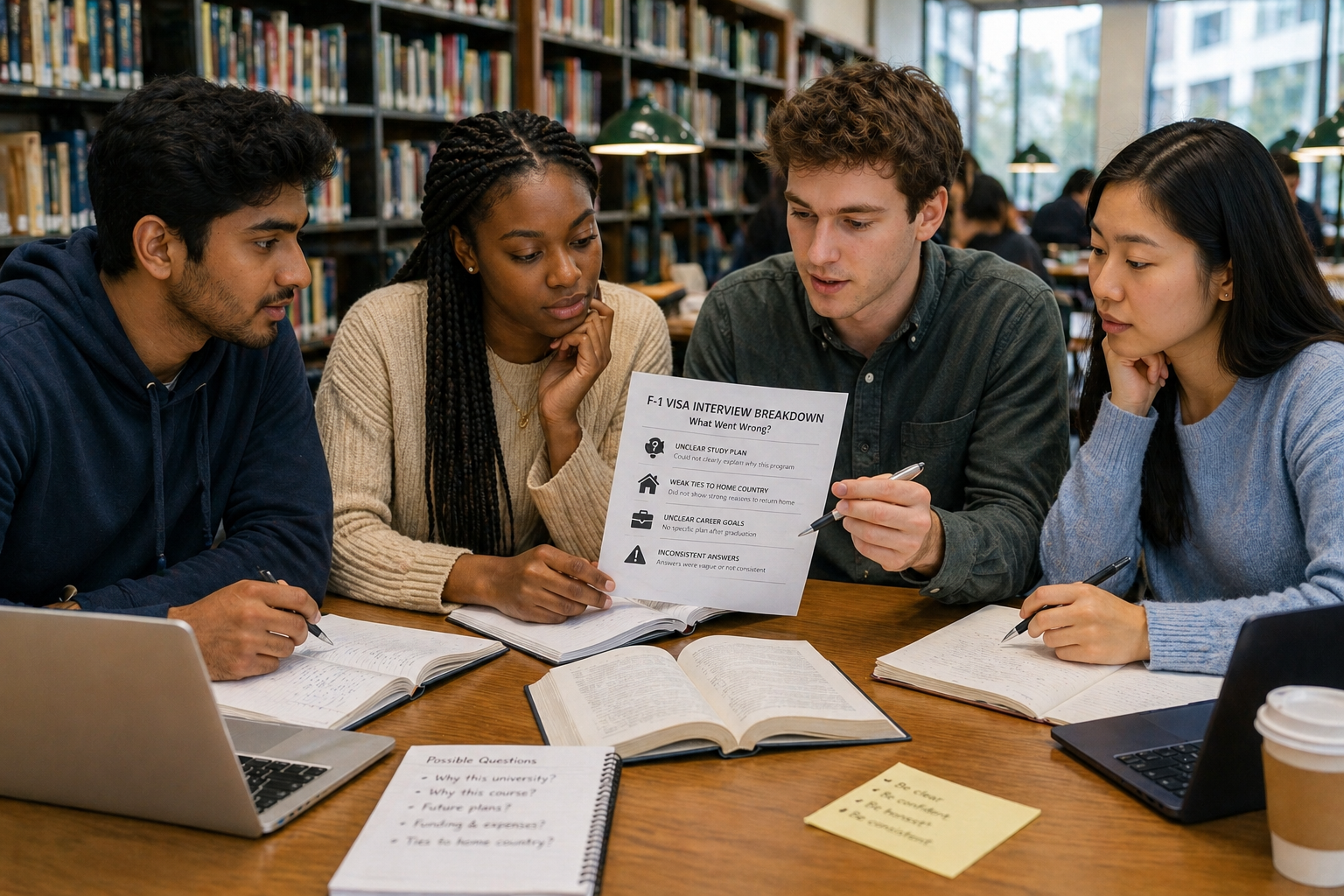
You walk out of the interview window, replaying every answer in your head. Something feels off. A few days later, you see the result—and it’s not what you expected. This is where many students start asking: real interview breakdown what went wrong?
If your F-1 visa was refused or you felt unsure about your performance, understanding what went wrong can help you prepare better next time. This blog breaks down a realistic interview scenario and explains the key mistakes students often make.
Why a Real Interview Breakdown What Went Wrong Matters
Most students focus only on documents, but visa interviews are about communication, clarity, and intent. A real interview breakdown what went wrong helps you identify gaps that are not obvious at first.
Visa officers evaluate your overall story, including:
- Your clarity about your course and university
- Your career plans
- Your confidence and communication
- Your ties to your home country
Let’s go through a realistic breakdown.
Real Interview Scenario: Step-by-Step Breakdown
Question 1: Why did you choose this university?
Student Answer: “It’s a good university and has a strong ranking.”
What went wrong:
- Answer was too generic
- No personal connection to the university
- Lack of specific details (course, faculty, opportunities)
Question 2: Why this course?
Student Answer: “I want to study business because it has good scope.”
What went wrong:
- Unclear academic reasoning
- No connection to past studies
- No defined career direction
Question 3: What are your plans after graduation?
Student Answer: “I will see opportunities and maybe work in the U.S.”
What went wrong:
- Weak home-country connection
- Uncertain future plan
- Lack of clarity about long-term goals
Question 4: Who is sponsoring your education?
Student Answer: “My parents. We have enough funds.”
What went wrong:
- Answer was short and not well explained
- No confidence in delivery
- Missed opportunity to show financial clarity
Key Patterns in What Went Wrong
From this real interview breakdown what went wrong, we can identify common patterns:
- Generic and memorized answers
- Lack of personal story
- Unclear academic and career direction
- Weak communication and confidence
These issues are more about presentation than documents.
Step-by-Step: How to Fix These Issues
1. Make Your Answers Personal
Instead of general statements, explain your specific reasons.
- Why this university for you?
- What attracted you to this program?
2. Connect Past, Present, and Future
Your story should be consistent.
- Past: Your education or experience
- Present: Your chosen course
- Future: Your career goals
3. Be Clear About Career Plans
You don’t need perfect answers, but you need direction.
- What role do you see yourself in?
- How will this degree help?
4. Practice Natural Communication
Avoid memorizing scripts.
- Practice speaking clearly
- Keep answers simple and direct
Common Mistakes to Avoid
- Giving one-line or vague answers
- Using overly complex or memorized language
- Not understanding your own application
- Showing uncertainty or confusion
- Overthinking instead of staying natural
Practical Advice for Your Next Interview
- Do mock interviews: Simulate real interview conditions
- Record yourself: Review your tone and clarity
- Prepare key points: Not full scripts
- Stay calm: Confidence improves your delivery
Improvement comes from awareness and practice.
Final Thoughts: Learn from What Went Wrong
A real interview breakdown what went wrong is not about focusing on mistakes—it’s about learning from them.
Every interview experience gives you insight into how you present yourself. By refining your answers, improving clarity, and building confidence, you can approach your next attempt with a stronger mindset.
Focus on telling your story clearly and honestly. When you do that, your preparation starts to show naturally.
From university selection and scholarships to F-1 visa interview preparation — expert guidance built for international students.