
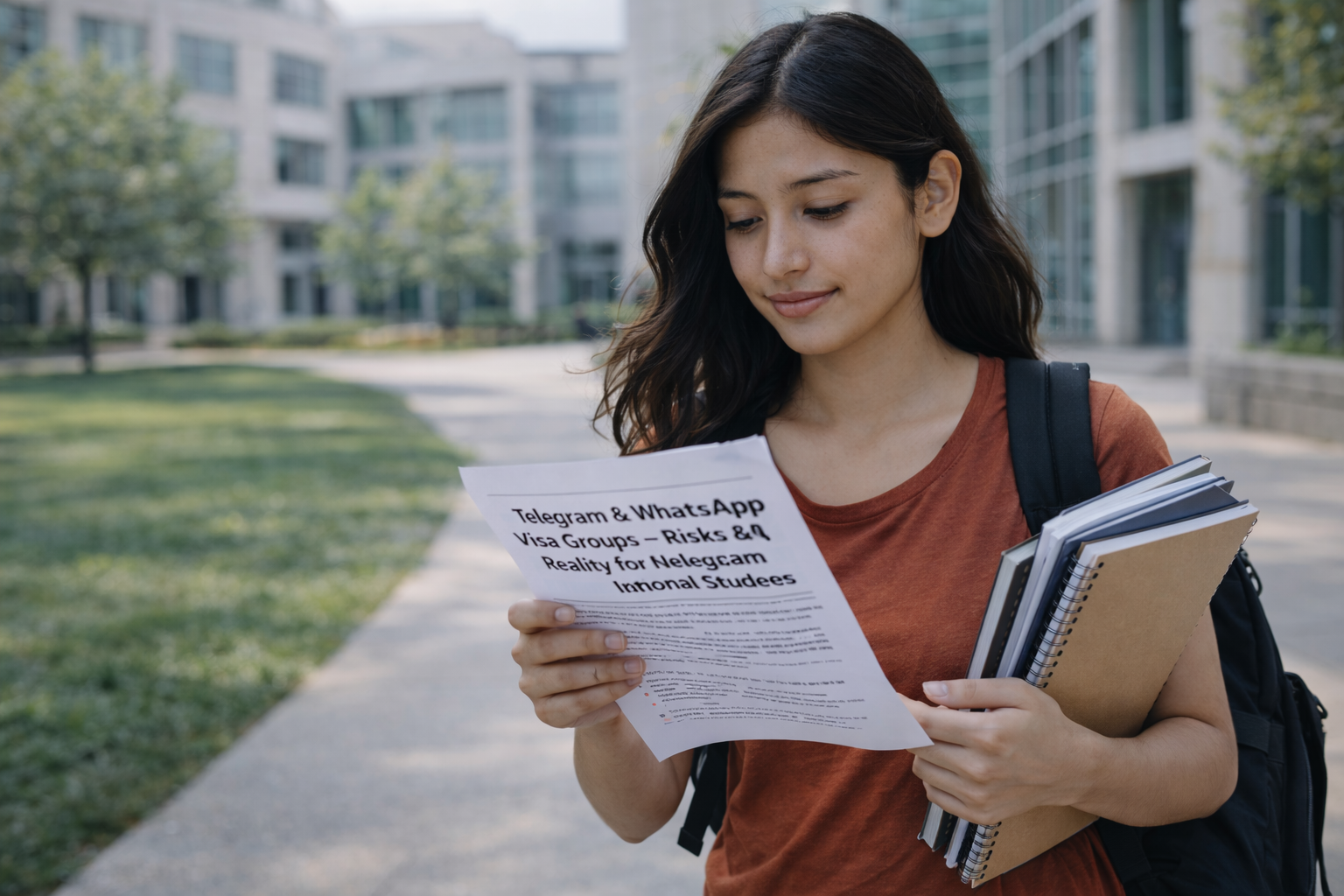
Many international students preparing to study in the United States search for information wherever they can find it. Online communities on platforms like Telegram and WhatsApp often appear to offer quick answers, shared experiences, and support from other applicants.
At first glance, these groups may seem helpful. Students discuss visa interviews, university admissions, and document preparation. However, the reality is more complicated. Understanding Telegram & WhatsApp visa groups — risks & reality can help students avoid misinformation and make better decisions during the F-1 visa application process.
While some discussions can be useful, relying entirely on advice from anonymous online groups may lead to confusion, unnecessary stress, or incorrect information.
Why Students Join Telegram & WhatsApp Visa Groups
Applying for a student visa can feel overwhelming, especially when students are navigating unfamiliar systems and deadlines. Many applicants join online visa groups to connect with others who are going through the same process.
These communities often attract students because they offer:
- Real-time discussions about visa interview experiences
- Shared timelines and appointment updates
- Advice from previous applicants
- Emotional support from peers
While this environment can feel reassuring, it is important to remember that not all shared advice is reliable.
Telegram & WhatsApp Visa Groups — Risks & Reality
Understanding Telegram & WhatsApp visa groups — risks & reality means recognizing both the helpful aspects and the potential problems these communities can create.
Many students assume that because large numbers of people participate in a group, the information shared must be accurate. In reality, anyone can post advice, regardless of their experience or understanding of visa policies.
This can sometimes result in misinformation spreading quickly.
Common Risks Students May Encounter
1. Unverified Information
Many group members share personal opinions or assumptions that may not reflect official policies. What worked for one student may not apply to another applicant.
Visa outcomes depend on individual circumstances, so copying someone else’s approach may not always be helpful.
2. Conflicting Advice
Students often encounter conflicting suggestions within the same group. One person may recommend a particular answer during the interview, while another suggests something entirely different.
This can create confusion and increase anxiety before the visa interview.
3. Spread of Visa Myths
Some visa myths spread rapidly through messaging groups. Examples include ideas about specific answers guaranteeing approval or certain universities being easier for visas.
These claims are often based on speculation rather than official guidance.
4. Hidden Promotions or Recruitment
Some groups are quietly used to promote consulting services or paid interview preparation programs. Students may receive private messages encouraging them to purchase services.
Not all promotional messages are harmful, but students should evaluate them carefully.
Common Mistakes Students Make in Visa Groups
Many students unintentionally rely too heavily on advice from online communities. Some common mistakes include:
- Treating group advice as official guidance
- Copying other students’ interview answers
- Believing visa myths repeated in discussions
- Feeling discouraged after reading negative experiences
Remember that each visa interview is unique, and outcomes vary widely between applicants.
How to Use Visa Groups More Carefully
Telegram and WhatsApp groups are not inherently harmful. In fact, they can sometimes provide helpful perspectives from other students. The key is using them carefully.
Students can benefit from these groups by following a few practical guidelines:
- Use groups to understand general experiences, not official rules
- Verify information through reliable sources
- Avoid copying scripted interview answers
- Focus on preparing based on your own academic plans
Maintaining a balanced approach helps students avoid unnecessary stress.
Reliable Sources of Visa Information
When preparing for a visa interview, students should prioritize information from trusted and authoritative sources.
Reliable sources include:
- Official government visa websites
- University international student offices
- Official university admissions pages
- Educational institutions themselves
These sources provide information that is more consistent with the actual visa process.
Practical Advice for Students Preparing for a Visa Interview
Instead of relying heavily on online group discussions, students can focus on practical preparation strategies.
- Understand your chosen university and program
- Prepare to explain your academic goals clearly
- Organize financial and admission documents
- Practice answering common interview questions
Confidence and clarity during the interview often come from preparation rather than memorizing answers shared online.
Conclusion
Telegram and WhatsApp visa groups can create a sense of community for students navigating the study abroad process. However, understanding Telegram & WhatsApp visa groups — risks & reality helps applicants recognize that not all information shared in these spaces is reliable.
Students who combine peer discussions with verified information from trusted sources are often better prepared for their F-1 visa interviews. By focusing on accurate knowledge and thoughtful preparation, international students can approach the visa process with greater confidence and clarity.
From university selection and scholarships to F-1 visa interview preparation — expert guidance built for international students.