
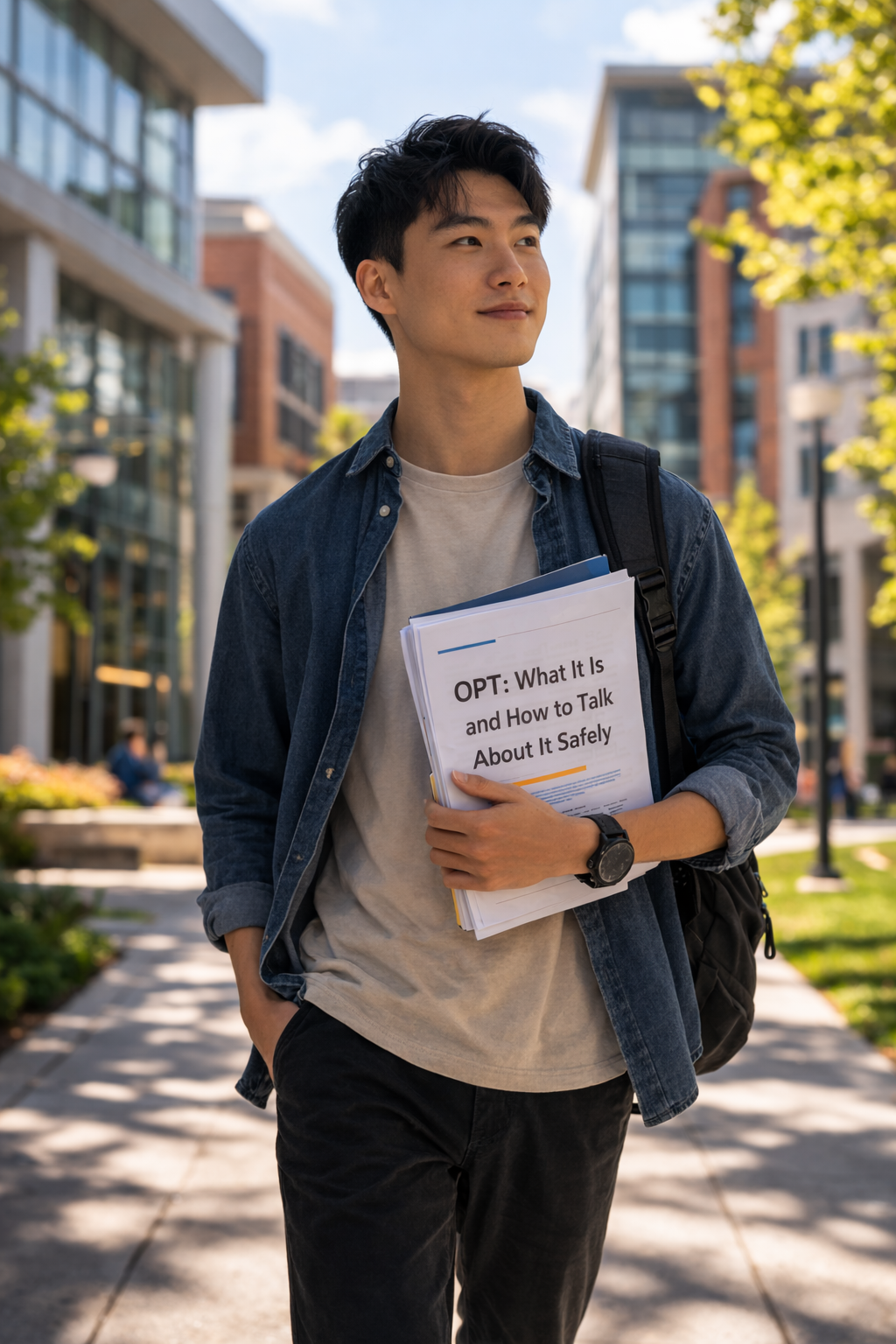
Many international students researching study opportunities in the United States eventually hear about Optional Practical Training, commonly called OPT. However, confusion often arises about what OPT actually is and how students should talk about it, especially during visa interviews.
Understanding OPT: What It Is and How to Talk About It Safely can help students plan their academic journey while avoiding misunderstandings about U.S. student visa rules. OPT is designed to provide practical experience related to a student’s field of study, but it must always remain connected to the primary purpose of an F-1 visa: education.
OPT: What It Is and How to Talk About It Safely
Optional Practical Training (OPT) is a type of temporary work authorization available to eligible F-1 students. It allows students to gain real-world experience in their academic field after completing, or sometimes during, their degree program.
The key idea behind OPT is practical learning. Students apply the knowledge gained during their academic program in a professional environment that relates directly to their major.
Typical characteristics of OPT include:
- Work experience related to the student’s field of study
- Temporary authorization connected to academic training
- An opportunity to gain professional exposure after graduation
While OPT offers valuable experience, it is considered an extension of academic learning rather than a permanent employment pathway.
Types of OPT Students Should Know
There are two main types of OPT that international students often encounter during their academic planning.
Pre-Completion OPT
This type of OPT occurs while students are still enrolled in their academic program.
- Usually part-time during academic semesters
- May allow additional practical exposure during study
- Must not interfere with academic progress
Post-Completion OPT
This is the most common form of OPT used by graduating students.
- Begins after completing the academic program
- Allows students to apply academic knowledge in real workplaces
- Must remain directly related to the student’s major
Students typically plan their OPT timeline carefully with their university advisors.
Why OPT Is Important for International Students
For many students, OPT provides the first opportunity to experience the professional environment in the United States. This experience can help bridge the gap between academic learning and real-world industry practices.
Some potential benefits include:
- Developing professional skills
- Applying academic knowledge to real projects
- Building international work experience
- Strengthening future career prospects
Because OPT connects education with practical learning, universities often discuss it as part of academic planning.
How to Talk About OPT Safely During Visa Conversations
Students sometimes worry about mentioning OPT when discussing their study plans. The key is to keep the focus on education and academic goals.
When discussing OPT, students can safely emphasize:
- The academic program they plan to study
- The skills they want to develop in their field
- The value of practical training connected to their degree
It is generally helpful to frame OPT as an educational extension rather than the main purpose of studying in the United States.
Common Misunderstandings About OPT
Many misconceptions about OPT can create unnecessary anxiety for international students.
Some common misunderstandings include:
- Believing OPT is guaranteed for every student
- Thinking OPT is the primary purpose of the F-1 visa
- Assuming any job qualifies for OPT
- Confusing OPT with other work authorization options
In reality, OPT is simply a structured opportunity for practical experience connected to academic study.
Practical Advice for Students Planning OPT
Students who start learning about OPT early often find the process easier to navigate.
Helpful preparation steps include:
- Discuss OPT planning with the international student office
- Understand how OPT relates to your academic program
- Keep records of academic and employment documents
- Follow official university guidance when applying
Planning ahead helps students make informed decisions about internships and professional development.
Balancing Education and Professional Experience
International students come to the United States primarily to study. Practical training opportunities like OPT exist to enhance that educational experience rather than replace it.
Students who approach OPT thoughtfully often gain valuable exposure to professional environments while continuing to prioritize their academic goals.
Conclusion
Understanding OPT: What It Is and How to Talk About It Safely can help international students feel more confident about their study plans in the United States. OPT is designed to connect academic knowledge with practical experience, allowing students to build skills that complement their education.
By focusing on academic goals, seeking guidance from university advisors, and learning the rules early, students can approach OPT with clarity and confidence as part of their broader educational journey.
From university selection and scholarships to F-1 visa interview preparation — expert guidance built for international students.