
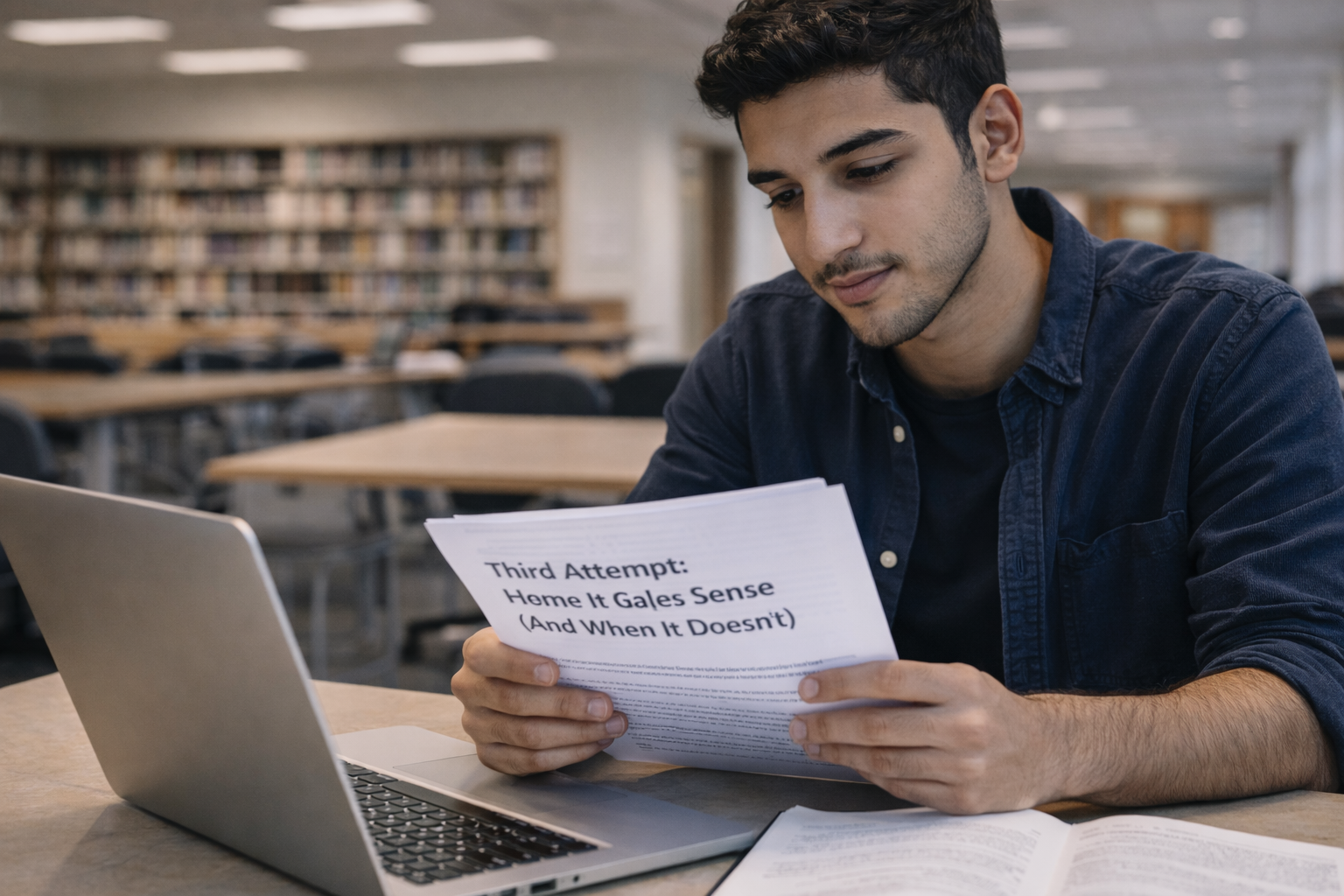
After two F-1 visa refusals, many students ask the same difficult question: should I try a third attempt? At this stage, emotions are high. Some students feel determined to try again immediately. Others feel discouraged and unsure what to do next.
A third attempt F-1 visa strategy must be based on logic, not urgency. Sometimes a third interview makes sense. Sometimes it does not. The difference lies in what has genuinely changed since your previous applications.
Understanding What a Third Attempt Means
Before deciding on a third attempt, remember that visa officers can see your full application history. Each interview builds a record.
This means your third attempt is not treated as an isolated case. Officers may review:
- Your previous interview responses.
- The refusal grounds.
- Consistency across applications.
- Any changes in your profile.
If nothing has meaningfully improved, the outcome is unlikely to change.
When a Third Attempt Makes Sense
1. You Identified the Real Concern
If you now clearly understand why your earlier interviews were refused, and you have corrected that weakness, a third attempt may be reasonable.
Examples include:
- You clarified your academic progression.
- Your financial documentation is now stronger and easier to explain.
- Your career goals are more structured and realistic.
- You gained relevant work experience aligned with your program.
2. Your Situation Has Materially Changed
A third attempt makes more sense when there is a real, measurable change, such as:
- A new academic admission that better fits your background.
- Improved financial sponsorship.
- Stronger academic credentials.
- Clearer long-term career positioning.
Time alone does not count as a meaningful change.
3. You Improved Interview Communication
Sometimes the issue was not your profile, but your presentation. If you:
- Previously gave memorized answers.
- Struggled with follow-up questions.
- Appeared nervous or inconsistent.
And you have now worked seriously on communication clarity and confidence, a third attempt may be justified.
When a Third Attempt Does NOT Make Sense
1. Nothing Has Changed
If your university, finances, academic story, and explanations remain the same, repeating the same interview is unlikely to produce a different result.
2. You Are Applying Out of Panic
Applying quickly because of pressure from deadlines or social comparison often leads to rushed preparation.
Urgency without improvement is risky.
3. You Are Relying on Embassy Location Changes
Changing appointment locations rarely changes outcomes. Decisions are made case by case, not based on perceived approval “ratios.”
Questions to Ask Yourself Before a Third Attempt
- Can I clearly explain what was weak in my previous interviews?
- Has my academic logic improved?
- Is my financial explanation now simple and transparent?
- Am I more confident and natural in answering questions?
- Would I approve my own case if I were the officer?
If you cannot confidently answer yes to these questions, you may need more time before reapplying.
Common Mistakes in a Third Attempt
- Overloading documents without improving explanations.
- Completely changing academic direction without logic.
- Blaming previous officers during the interview.
- Memorizing new scripts instead of speaking naturally.
- Ignoring previous weaknesses.
A third attempt should show maturity and reflection, not desperation.
Strategic Alternatives to a Third Attempt
In some cases, pausing may be smarter than proceeding immediately.
Alternatives include:
- Gaining relevant work experience.
- Improving academic credentials.
- Applying in a later intake.
- Re-evaluating program alignment.
Strategic patience can sometimes strengthen your case more than another quick interview.
Practical Third Attempt Preparation Checklist
- Review notes from both previous interviews.
- Identify repeated weak areas.
- Refine your career plan explanation.
- Ensure financial clarity.
- Practice unscripted, confident communication.
- Prepare for deeper follow-up questions.
Remember: a third attempt requires stronger clarity than the first two.
Final Thoughts: Strategy Over Emotion
A third attempt F-1 visa decision should be based on strategic improvement, not emotion. If your profile, clarity, and communication have genuinely strengthened, it may make sense to proceed.
If nothing meaningful has changed, taking time to rebuild may be wiser.
The goal is not to keep trying repeatedly. The goal is to present a stronger, more credible case each time.
Disclaimer: This content is for educational guidance only. Visa approval is never guaranteed.
From university selection and scholarships to F-1 visa interview preparation — expert guidance built for international students.