
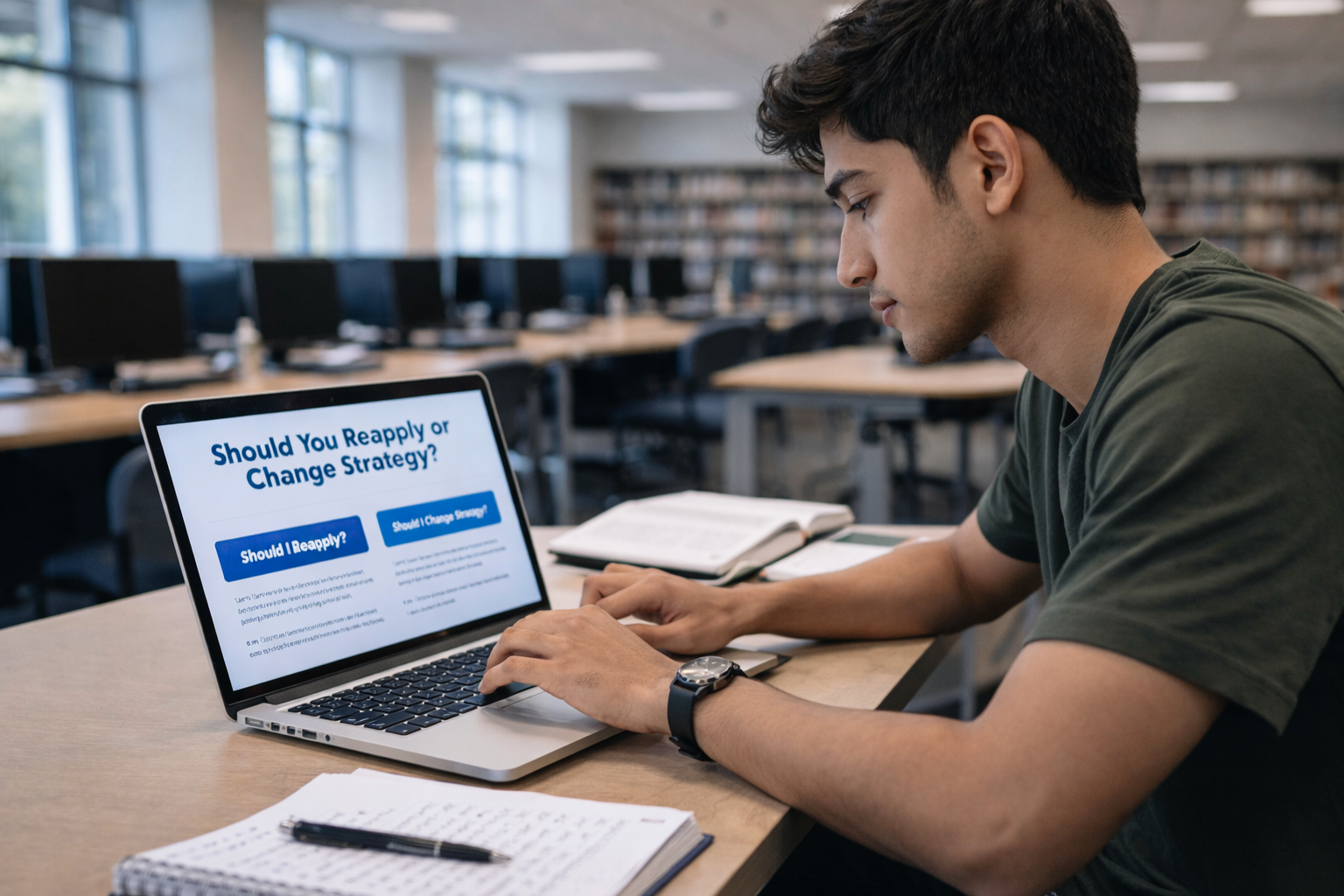
An F-1 visa refusal can leave you with one urgent question: should you reapply immediately, or should you change strategy first? Many students feel pressure from deadlines, family expectations, and university timelines. But rushing into another interview without reflection can lead to the same outcome.
If you are wondering whether to reapply or change strategy after an F-1 visa refusal, this guide will help you think clearly, calmly, and logically before making your next move.
Understanding Why the F-1 Visa Was Refused
Before deciding whether to reapply or change strategy, you must understand why the F-1 visa was refused. Most refusals happen under section 214(b), which usually means the officer was not fully convinced about your academic intent, financial strength, or long-term plans.
This does not mean your dream is over. It means something in your presentation was not clear or strong enough.
When Reapplying Quickly Might Make Sense
In some cases, reapplying without major changes may be reasonable.
- Your profile is strong but you struggled with nervousness
- You gave unclear or incomplete answers
- You misunderstood a key question
- You now feel confident explaining your case better
If the core of your application is solid and only your communication needs improvement, reapplying after careful preparation may be appropriate.
When You Should Change Strategy Before Reapplying
Sometimes, a simple reapplication is not enough. You may need to change strategy if:
- Your financial documentation was weak or inconsistent
- Your course choice did not align with your academic background
- Your career plans sounded vague or unrealistic
- You switched fields without clear explanation
- Your sponsor situation was unclear
In these situations, improving your explanation alone may not solve the problem. You may need to strengthen your profile first.
Step-by-Step: How to Decide Whether to Reapply or Change Strategy
Step 1: Reconstruct the Interview
Write down every question asked and your exact answers. Identify where the conversation shifted or became shorter.
Step 2: Identify the Weak Area
Ask yourself honestly:
- Was my financial explanation confident and clear?
- Did my academic plan make logical sense?
- Did I clearly explain my long-term goals?
Step 3: Categorize the Issue
Place your refusal into one of these categories:
- Communication issue – You explained poorly but documents were strong
- Documentation issue – Financial or academic proof was weak
- Strategic issue – Your program choice or profile needs improvement
Step 4: Decide Based on Evidence, Not Emotion
If the issue was communication, reapplying after structured practice may be enough. If it was documentation or strategy, fix those first.
Common Mistakes Students Make After Refusal
- Reapplying immediately without analyzing what went wrong
- Changing universities without fixing explanation gaps
- Memorizing new scripts instead of building understanding
- Assuming the refusal was random
- Taking advice from unverified sources
Every reapplication should show improvement, not repetition.
Practical Ways to Change Strategy Effectively
Strengthen Financial Clarity
Ensure your funding source is consistent, liquid, and clearly explainable. Be ready to discuss sponsor income and expense coverage naturally.
Refine Course Selection Logic
Your chosen program should connect clearly with your past studies and future goals. If there is a gap, prepare a structured explanation.
Clarify Career Plans
A strong profile includes realistic, country-specific career plans. Avoid generic statements.
Improve Delivery
Practice answering common F-1 visa interview questions with short, confident, natural responses.
How Long Should You Wait Before Reapplying?
There is no fixed waiting period. What matters is improvement. Reapply only when:
- You have identified the weak area clearly
- You have strengthened your profile
- You can confidently explain changes made
- Your answers feel natural, not memorized
Timing should support readiness, not urgency.
Strong Reassuring Conclusion
Deciding whether to reapply or change strategy after an F-1 visa refusal is not about speed. It is about clarity. Some students succeed in their very next attempt. Others succeed after improving key areas first.
A refusal is feedback. Use it wisely. With honest self-analysis, structured preparation, and calm confidence, your next interview can reflect growth and strength.
From university selection and scholarships to F-1 visa interview preparation — expert guidance built for international students.