
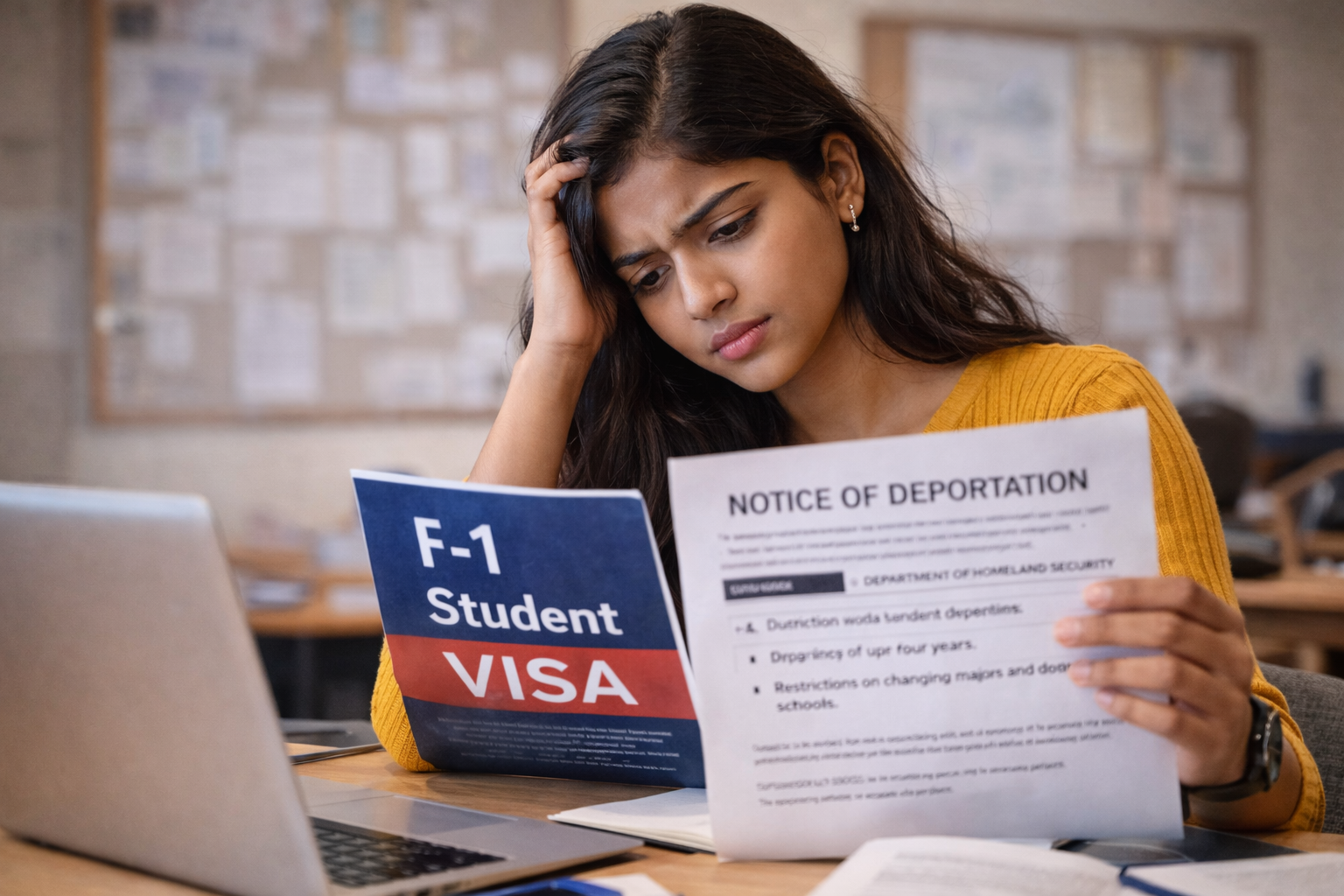
Many international students in the U.S. face financial pressure. Tuition is high, living expenses add up, and part-time work often feels insufficient. Under stress, some students consider working extra hours, freelancing online, or starting small businesses without realizing the serious consequences.
Understanding F-1 visa work rules is critical. Unauthorized employment can result in loss of visa status, termination of SEVIS records, and even cancellation of an academic degree.
Why F-1 Visa Work Rules Are Strict
The F-1 visa is a student visa, not a work visa. Its primary purpose is education, and employment is allowed only in limited, clearly defined situations.
U.S. immigration authorities expect F-1 students to:
- Study full time
- Maintain valid visa status
- Work only with proper authorization
Any work outside approved categories is considered a status violation.
What Kind of Work Is NOT Allowed on an F-1 Visa
Many students misunderstand what counts as illegal work.
On an F-1 visa, students are generally not allowed to:
- Work full time off campus
- Freelance online or offline without authorization
- Run an online or physical business
- Sell products regularly on platforms like eBay or Amazon
- Earn income without proper approval
Even if the income seems small or informal, it can still be considered unauthorized employment.
What Kind of Work Is Allowed on an F-1 Visa (With Permission)
F-1 students may work only under specific conditions.
Permitted options typically include:
- On-campus employment (limited hours)
- CPT (Curricular Practical Training) when approved
- OPT (Optional Practical Training) after eligibility
All of these require authorization and clear approval from the university or relevant authorities.
Part-Time Work Is Usually Not Enough — But Breaking Rules Makes It Worse
It is true that part-time work rarely covers full tuition and living expenses. This financial reality leads some students to take risks.
However, unauthorized work can:
- End academic enrollment
- Cancel visa status
- Invalidate years of education
- Create long-term immigration problems
Short-term financial relief can result in long-term damage.
A Real Case: Student Lost Degree and Visa Status
A recent reported case involved an international student whose F-1 visa was revoked due to unauthorized online sales activity. The student was found to be operating sales on an e-commerce platform while studying.
As a result:
- The student lost F-1 status
- The degree was invalidated
- The academic journey was disrupted
This case highlights that online income and small-scale business activity are not automatically “safe” under student visa rules.
Common Mistakes Students Make
- Assuming online work does not count as employment
- Believing small income will not be noticed
- Following advice from unverified sources
- Ignoring university international office guidance
- Waiting until a problem occurs to ask questions
Practical Advice for F-1 Students Under Financial Pressure
Students facing financial stress should focus on compliant options.
Practical steps include:
- Talking to the university international student office
- Understanding CPT and OPT eligibility clearly
- Planning finances before arrival
- Avoiding any work without written authorization
Clarity and planning reduce the risk of irreversible mistakes.
Final Reassurance
Financial pressure is real, and many students struggle silently. But unauthorized work is not a safe solution.
Protecting your F-1 visa status protects your education, future opportunities, and long-term goals. Making informed choices today can prevent serious consequences tomorrow.
When unsure, it is always better to ask, plan, and stay compliant.
From university selection and scholarships to F-1 visa interview preparation — expert guidance built for international students.