
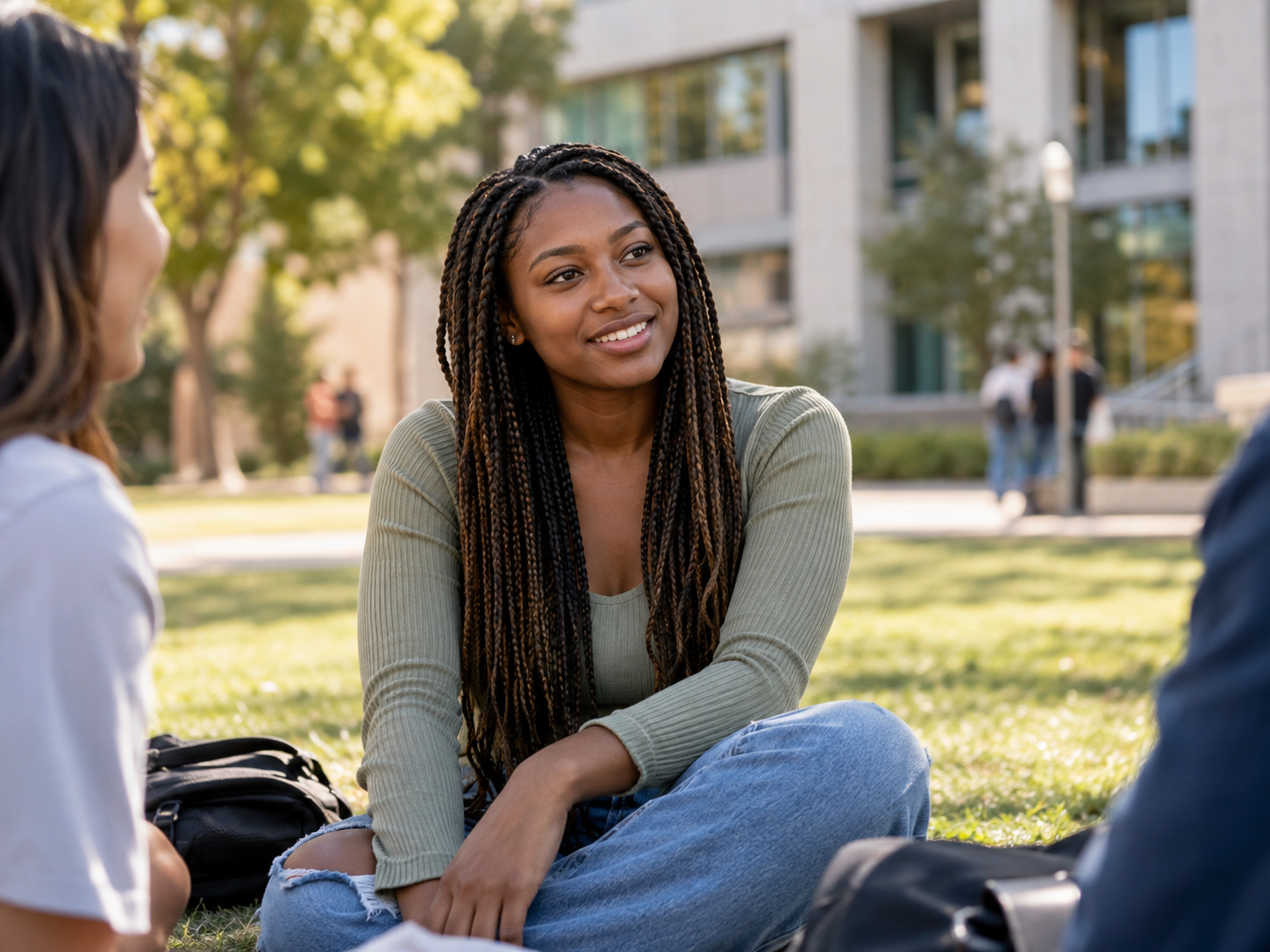
Your first few classes at a U.S. university may feel very different from what you experienced at home. Students may have different nationalities, cultures, languages, religions, identities, opinions, and ways of communicating. Some may speak confidently during class while others prefer to listen before responding. Respecting classroom diversity in the USA means learning how to participate without assuming that everyone thinks, communicates, or experiences the world in the same way.
For international students, understanding this environment can make classroom discussions less stressful and help build stronger relationships with classmates and professors.
Why Respecting Classroom Diversity in the USA Matters
U.S. higher education brings together students from many different backgrounds. EducationUSA specifically prepares international students for U.S. campus culture, classroom expectations, critical thinking, academic communication, and interaction with other students.
Diversity does not mean everyone must agree. A university classroom may include people with very different opinions about social issues, history, culture, business, science, politics, or everyday life.
The goal is to learn how to disagree respectfully while remaining open to hearing perspectives different from your own.
A respectful classroom environment usually begins with simple habits:
- Listening before responding
- Avoiding assumptions about classmates
- Giving others space to participate
- Disagreeing with ideas rather than attacking people
- Asking questions when something is unclear
- Being willing to reconsider your own assumptions
Practical Ways of Respecting Classroom Diversity in the USA
1. Listen Before You Judge
A classmate may describe an experience that is completely different from yours. Your first reaction may be disagreement or surprise. Instead of immediately challenging the person, listen carefully and try to understand the perspective being presented.
You can disagree without dismissing someone else’s experience.
For example, instead of saying, “That is wrong,” you might say that your experience has been different and then explain why. This keeps the conversation focused on ideas rather than personalities.
2. Avoid Stereotyping Classmates
One person cannot represent an entire country, religion, race, culture, or community.
Avoid assuming that a classmate must have a certain opinion because of where they come from. Questions such as “What does your entire country think about this?” can place unnecessary pressure on one student to speak for millions of people.
It is usually better to ask about the person’s own perspective.
3. Learn and Use People’s Names Respectfully
Names may be unfamiliar when you meet students from different cultures. If you are unsure how to pronounce someone’s name, politely ask them.
Making a genuine effort is better than repeatedly avoiding or changing someone’s name because it feels difficult to pronounce.
4. Respect Different Communication Styles
Students may communicate differently depending on personality, language ability, educational background, and previous classroom experience.
One student may speak quickly and frequently. Another may take longer to organize an answer. A student speaking English as an additional language may occasionally pause while searching for the right word.
Give classmates enough time to finish their thoughts rather than interrupting or completing their sentences for them.
5. Participate Without Dominating the Discussion
Class participation can be an important part of the learning experience, but participation does not mean speaking during every available moment.
If you have already contributed several times, consider allowing someone else to respond. Good classroom participation includes both speaking and listening.
During group work, invite quieter members to share their ideas without putting them under unnecessary pressure.
6. Disagree With Ideas, Not People
Academic discussions can involve disagreement. A classmate challenging your argument does not necessarily mean they are disrespecting you personally.
Keep your response focused on the subject:
- Explain which part of the argument you interpret differently.
- Provide evidence or reasoning for your position.
- Ask questions instead of making personal accusations.
- Remain calm when someone challenges your viewpoint.
Learning how to discuss disagreement constructively is an important academic skill.
Understanding Cultural Differences in a U.S. Classroom
International students sometimes interpret unfamiliar classroom behavior using the standards they learned at home. This can create misunderstandings.
For example, the way students communicate with professors may differ between institutions and cultures. Classroom discussion may also encourage questioning, critical thinking, or debate more strongly than some students experienced previously.
Do not assume that unfamiliar behavior is automatically rude or disrespectful. First observe how the course operates and review the professor’s expectations.
If you are uncertain, you can ask the professor during office hours or speak with an academic adviser or international student office.
Common Classroom Diversity Mistakes to Avoid
Most cultural mistakes are not intentional. Awareness can help you avoid situations that make classmates uncomfortable.
- Making jokes based on someone’s accent, nationality, race, religion, or identity
- Assuming two students from the same country have identical beliefs
- Interrupting classmates because they speak more slowly
- Expecting international students to explain an entire culture
- Using stereotypes as evidence during discussions
- Dismissing someone’s experience because it differs from your own
- Turning an academic disagreement into a personal argument
- Ignoring classmates during group assignments because communication requires extra effort
What Should You Do If You Accidentally Say Something Offensive?
Cultural misunderstandings can happen, especially when students are adjusting to a new environment.
If someone explains that your comment was inappropriate or hurtful, avoid immediately becoming defensive. Listen to what they are saying and consider the context.
If you recognize that your wording was inappropriate, a simple and sincere acknowledgment is usually more helpful than a long explanation of why you did not intend to offend anyone.
You can learn from the experience and communicate differently next time.
What If You Feel Uncomfortable During a Classroom Discussion?
You may occasionally encounter a discussion that makes you confused or uncomfortable. EducationUSA provides resources specifically addressing international students’ adjustment to U.S. classroom culture and uncomfortable classroom situations.
Depending on the situation, you can:
- Ask the professor for clarification.
- Speak privately with the professor after class.
- Use office hours to discuss an academic concern.
- Speak with an academic adviser.
- Contact your university’s international student support office when appropriate.
You do not need to understand every cultural difference immediately. Adjustment takes time.
Practical Advice for International Students
During your first semester, observe before making assumptions. Notice how classmates communicate, how professors manage discussions, and how students disagree with each other.
Join group projects, student organizations, campus activities, and informal conversations. Classroom diversity becomes easier to understand when you develop genuine relationships with people from different backgrounds.
Also remember that cultural exchange works in both directions. You do not need to abandon your own background to fit into a U.S. classroom. Your experiences can contribute valuable perspectives to discussions when shared respectfully and appropriately.
Conclusion
Respecting classroom diversity in the USA is not about knowing everything about every culture. It is about developing habits that make learning with different people easier: listening carefully, avoiding stereotypes, communicating respectfully, asking thoughtful questions, and remaining open to perspectives different from your own.
You may occasionally misunderstand someone, pronounce a name incorrectly, or feel uncertain during a discussion. That does not mean you cannot adapt. Stay curious, communicate respectfully, and be willing to learn from mistakes.
A diverse classroom gives international students an opportunity not only to earn a degree but also to learn how to study, communicate, and collaborate with people whose experiences may be very different from their own.
From university selection and scholarships to F-1 visa interview preparation — expert guidance built for international students.