
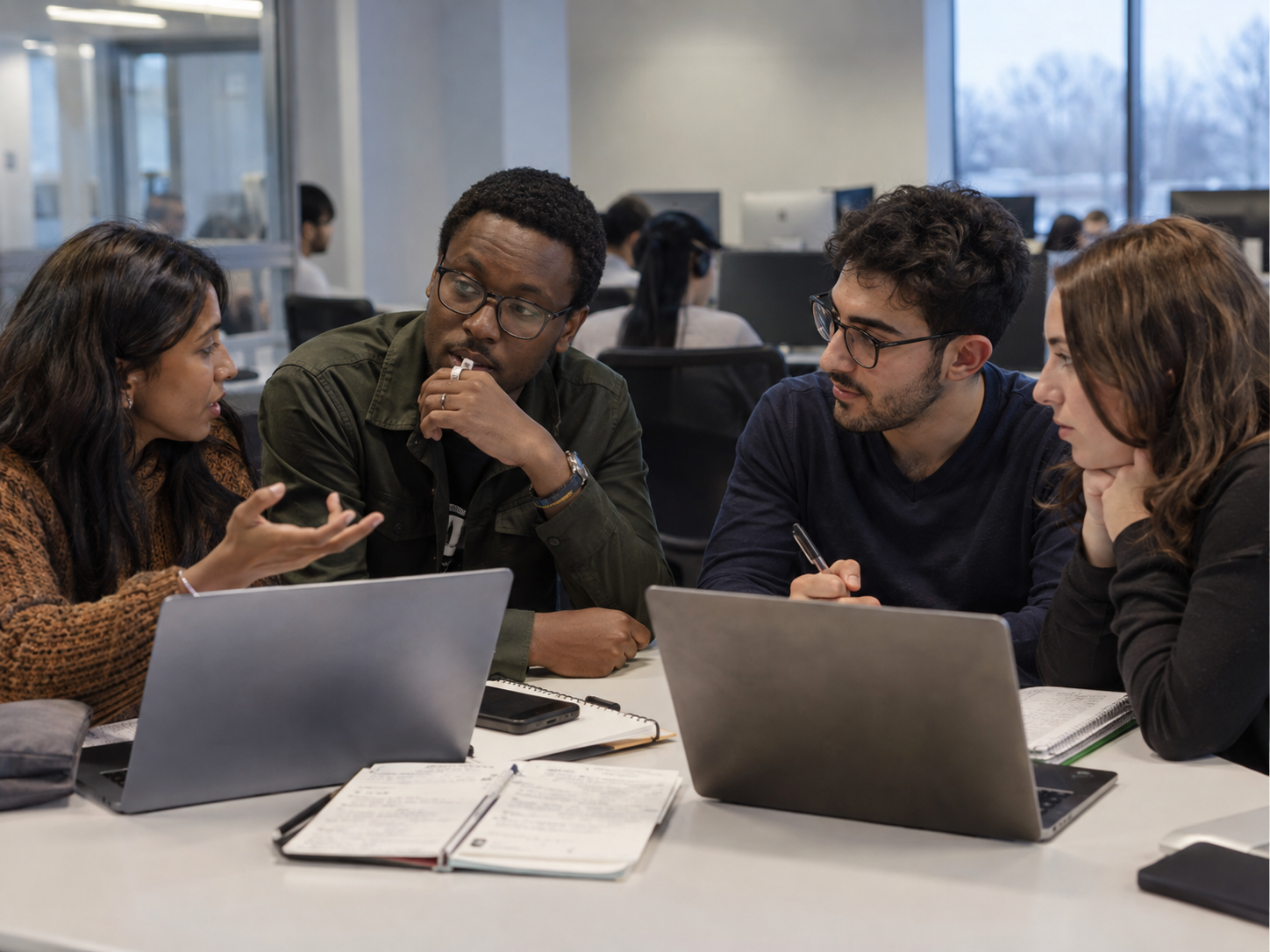
Starting university in the United States means adjusting to new teaching styles, citation systems, collaboration rules, exams, research expectations, and increasingly, rules about artificial intelligence. A student can sometimes make a serious mistake simply because they misunderstand what is allowed. Academic misconduct, however, can lead to consequences ranging from a warning or failed assignment to suspension or removal from a university, depending on the institution and the seriousness of the case.
For international students, there can also be an additional concern: if disciplinary action prevents you from remaining enrolled as required, it may affect your F-1 student record. That does not mean every academic-integrity violation creates an immigration problem. The outcome depends on the university’s decision and your individual enrollment situation.
What Is Academic Misconduct?
Academic misconduct generally means violating a school’s rules for honest academic work. Universities create their own academic-integrity policies, so the exact definitions and procedures can differ.
Common examples include:
- Plagiarizing another person’s words, ideas, code, research, or creative work.
- Cheating during an examination or quiz.
- Submitting someone else’s work as your own.
- Using unauthorized notes, websites, devices, or assistance.
- Sharing answers when collaboration is prohibited.
- Fabricating research data, references, results, or sources.
- Reusing previous work when the course does not permit it.
- Helping another student violate academic-integrity rules.
- Using generative AI in ways prohibited by the instructor or course policy.
For example, Stanford University’s Honor Code prohibits giving or accepting unpermitted academic aid and lists plagiarism, unauthorized collaboration, and representing another person’s work as your own among examples of violations. Harvard Extension School similarly identifies plagiarism and cheating as academic-integrity violations. Policies differ by institution, so your own syllabus and student handbook should always be your first reference.
Why Academic Misconduct Can Happen Accidentally
Not every problem begins with a plan to cheat. International students may arrive from educational systems with different rules about collaboration, paraphrasing, citation, group assignments, tutoring, or reuse of material.
A student may incorrectly believe that changing a few words removes the need for citation. Another student may think friends can work together because an assignment does not explicitly say “individual work.” Someone else may use an AI tool without realizing that the instructor considers that type of assistance prohibited.
These misunderstandings are important to prevent because universities generally expect students to learn the rules that apply to their courses. Harvard Extension School, for example, states that students are responsible for understanding academic-integrity requirements and using sources appropriately.
Academic Misconduct Risks and Consequences
The consequences of academic misconduct are not identical at every U.S. university. The penalty usually depends on institutional policy, the nature of the violation, prior history, and the outcome of the school’s disciplinary process.
1. Warning or Educational Requirement
For some cases, a student may receive a warning or be required to complete academic-integrity training, writing instruction, or another educational requirement.
2. Reduced or Failing Grade
A student may receive reduced credit or no credit for an assignment, examination, project, or course. Harvard Extension School, for example, states that plagiarism or cheating can result in serious academic sanctions, including a permanent failing course grade in some circumstances.
3. Academic or Disciplinary Probation
Some institutions may place a student on probation after a confirmed violation. Additional violations during that period can lead to more serious disciplinary action.
4. Suspension
Serious or repeated violations may result in temporary suspension. This can be particularly important for international students because suspension may prevent the student from maintaining the enrollment required for F-1 status.
5. Required Withdrawal or Expulsion
Severe cases can result in required withdrawal or expulsion under some university policies. Harvard Extension School, for example, states that serious academic misconduct may result in a requirement to withdraw or suspension of registration privileges.
6. Academic Record Consequences
Depending on institutional policy, certain sanctions may appear in internal disciplinary records or on an academic transcript. Students should not assume that every violation produces the same type of permanent record.
Can Academic Misconduct Affect F-1 Status?
An academic misconduct finding does not automatically mean an F-1 student’s SEVIS record will be terminated. The important question is what happens to the student’s enrollment and ability to maintain status after the university’s disciplinary decision.
Department of Homeland Security guidance for Designated School Officials lists both suspension and expulsion as possible SEVIS termination reasons when the disciplinary action makes the student unable to maintain F-1 status.
This distinction is important. A failed assignment, for example, is very different from being suspended from the university. If a disciplinary case could affect your registration, enrollment, or ability to continue studying, contact your Designated School Official promptly and ask how the university decision affects your individual record.
Academic Misconduct and AI Tools
Artificial intelligence has made academic-integrity rules more complicated because policies can vary not only between universities but also between individual courses.
Some instructors permit AI for brainstorming, language support, research organization, or feedback. Others prohibit AI on graded assignments. Some require disclosure or citation.
Stanford’s current university guidance, for example, treats generative AI as a form of outside assistance when a course has not established a different policy, while also allowing individual instructors to set their own rules.
Before using an AI tool for coursework, ask:
- Does the syllabus specifically allow AI?
- Can AI be used for brainstorming but not final answers?
- Must AI assistance be disclosed or cited?
- Can assignments or exam questions be entered into an AI system?
- Does the professor have a separate policy for this particular assignment?
If the instructions are unclear, ask the instructor before submitting the work.
How International Students Can Avoid Academic Misconduct
1. Read the Academic Integrity Policy
Do not rely only on what friends tell you. Review your university’s academic-integrity policy, student handbook, course syllabus, and assignment instructions.
2. Learn the Required Citation Style
Your program may use APA, MLA, Chicago, IEEE, or another citation system. Learn when quotation marks, in-text citations, footnotes, and reference lists are required.
3. Cite Ideas, Not Just Direct Quotes
Changing another author’s wording does not automatically make the idea yours. Paraphrased or summarized material generally still requires attribution when it comes from another source.
4. Confirm Collaboration Rules
A group project allows collaboration because the instructor has authorized it. That does not mean students can automatically collaborate on every homework assignment.
5. Keep Your Own Research Notes
Record the source of information while researching. This makes accidental plagiarism much less likely when you later write the assignment.
6. Ask Before Using AI
Never assume that because an AI tool is publicly available, it is permitted for a particular assignment. Course rules determine whether its use is acceptable.
7. Avoid Last-Minute Work
Time pressure can lead to poor citation, careless copying, unauthorized collaboration, or inappropriate use of online material. Starting early gives you time to ask questions.
What Should You Do If You Are Accused of Academic Misconduct?
First, read the notice carefully. Do not delete files, edit records, or immediately send an emotional response.
Instead:
- Review the relevant academic-integrity policy.
- Save drafts, research notes, version histories, citations, and assignment instructions.
- Understand the university’s disciplinary or appeal process.
- Respond truthfully and clearly.
- Attend scheduled meetings or hearings.
- Ask what academic consequences are being considered.
- If your enrollment may be suspended or terminated, contact your DSO about the F-1 implications.
A university misconduct proceeding and an F-1 status question are related only when the academic outcome affects your ability to meet student-status requirements. Do not assume an outcome before the university completes its process.
Common Mistakes to Avoid
- Assuming plagiarism only means copying an entire paragraph.
- Using a friend’s previous assignment as a template and copying its structure or answers.
- Submitting group work for an individual assignment.
- Using AI because “everyone else uses it.”
- Inventing references or citing sources you did not actually use.
- Sharing your completed assignment with another student.
- Ignoring an academic-integrity notice from the university.
- Assuming every academic penalty automatically affects your visa.
Practical Advice for International Students
During your first semester, visit your university’s writing center, library, or academic-support office even if you are confident in your English. Ask specifically about citation, paraphrasing, research practices, collaboration, and AI policies.
Keep copies of important academic policies and assignment instructions. If a professor gives verbal permission for unusual collaboration or technology use, consider confirming the instructions through the course’s official communication system.
Most importantly, ask when you are uncertain. A short question before submitting an assignment is much easier to handle than an academic-integrity investigation afterward.
Conclusion
Academic misconduct can have serious consequences, but many problems are preventable. International students should learn their university’s rules for plagiarism, collaboration, exams, research, citations, and AI use rather than assuming that familiar practices from another educational system apply in the United States.
The academic penalty for a violation depends on the institution and circumstances. For F-1 students, immigration consequences generally become relevant when disciplinary action affects continued enrollment or the ability to maintain student status. If that happens, speak with your DSO about your individual SEVIS record.
Academic integrity is ultimately about making it clear which work, ideas, and decisions are genuinely yours. Learning those expectations early can protect both your education and your confidence as you progress through university.
Official Sources and Further Reading
- U.S. Department of Homeland Security – SEVIS Termination Reasons for DSOs
- Stanford University – Honor Code
- Stanford University – Guidance on Generative AI
- Harvard Extension School – Academic Integrity
This article provides general educational information. Academic-integrity procedures and F-1 consequences depend on individual circumstances and institutional policies. Students should confirm current requirements with their university and Designated School Official.
From university selection and scholarships to F-1 visa interview preparation — expert guidance built for international students.